Trevi House, a leading women’s charity in Devon, has opened a new national parenting assessment centre, Daffodil House.
The brand-new centre, Daffodil House, received Ofsted registration at the beginning of the year and enables parenting capacity to be assessed whilst the child remains in the care of the parent.
Daffodil House is run by the charity, Trevi House, which has 27 years’ experience in working with mothers where substance misuse is a presenting issue. It is based in the South West Ocean City of Plymouth, which has recently committed to becoming a trauma informed city.
Dedicated to ensuring the best outcomes for children, Daffodil House places the child at the centre of its work with a trauma informed approach. The safety and welfare of the child is paramount.
Daffodil offers a strengths-based and psychologically informed assessment helping parents to address the complex and often longstanding underlying issues that will have interrupted safe parenting techniques. With 24/7 supervision and monitoring, Daffodil’s multidisciplinary team supports parents to identify what changes they need to make in order to keep their child safe.
Whilst undergoing assessment, mothers are also encouraged to make use of the therapeutic services on offer at the charity’s Sunflower Women’s Centre less than a 5-minute walk away. The Sunflower Women’s Centre is also equipped with a mindfulness and wellbeing suite and a trauma informed creche, known as Sunflower Seeds, which is the base for the charity’s contact centre.
Management Team
The centre is managed by Registered Manager, Margaret Bersey MBE. Margaret worked in childcare for the Plymouth City Council for more than 40 years. She worked as a childcare social worker and ran numerous teams as a Team Manager. Margaret has won a number of awards and in 2016 she was awarded an MBE for work with children and families in the Queen’s Birthday Honours List.
Registered Manager, Margaret Bersey MBE
Margaret Bersey states: “We are very pleased to open our new service, Daffodil House. Whilst our assessment will consider and support the needs of the parents, the focus will be on the child, with a view to facilitate care planning for the child’s longer-term future. Every parent will receive a fair assessment of their parenting skills and capacity, will be given individualised support in line with their abilities, needs and background. Whatever the outcome of the parenting assessment, we aim to ensure that the experience of the family is one of transparent working, respectful practice and collaboration.”
Daffodil House can accommodate up to 5 families at any one time. The centre is spread across three floors. Each family has access to a large bedroom, shared kitchen, lounge/ dining area and bathroom. There is also a self-contained space on the third floor for one family; all bedrooms are monitored by CCTV. Located centrally in Plymouth, the centre is a short walk from many parks, resources and amenities. Each family will receive a welcome pack upon arrival which contains basic food items.
Import restrictions on cannabis-based products for medicinal use have been revised to ensure that people with conditions such as multiple sclerosis or serious forms of epilepsy do not have their treatment ‘delayed or interrupted’, the government has announced.
While the law was changed in 2018 to allow specialist doctors to prescribe cannabis-based products for certain conditions (DDN, November 2018, page 5), delays in people accessing the medicines have been widely reported. Most cannabis-based medicines are imported which means restrictions can cause significant delays, with export certificates in some countries taking up to two months to process.
Matt Hancock: New rules are a ‘tremendous step’
The new rules mean that licensed wholesalers can now import much larger quantities of the products and hold supplies for future use. The government will also ‘continue to engage with medical associations and patients’ to build an evidence base, it says. Last year the National Institute for Health and Care Excellence (NICE) ruled that more research was needed into cannabis-based medicines before they could be widely prescribed (DDN, September 2019, page 5).
The changes were ‘tremendous step’ towards improving supply, said health secretary Matt Hancock. ‘But we still have a long way to go. We need more research into the quality and safety of these medicines, and to do all we can to cut down the costs and remove barriers so that, when appropriate, patients can access it, including on the NHS.’
Pharmacy lead at the Centre for Medicinal Cannabis industry body Dr Andy Yates stated that it was ‘crucial as we build the evidence required to realise the potential of cannabis-based medicinal products that there are no unnecessary impediments to accessing prescriptions. We are grateful that the government has listened to the valid concerns expressed by our members and responded with measures that will immediately improve access to these novel medicines and accelerate clinical understanding of their use.’
Heroin Assisted Treatment (HAT) is showing dramatic progress in transforming lives. DDN reports.
Read the full article in DDN Magazine
‘Life was shit. I would rob Peter to pay Paul. I’d cry every day and was at rockbottom, living on people’s settees, doing drugs whenever I could.’ ‘Julie’, Middlesbrough, 2020
‘Julie talks to clinical lead Danny Ahmed about her treatment’.
If Julie was living in middle class society in Britain before the 1960s she might have been prescribed heroin for her addiction problem. Until the Dangerous Drugs Act of 1967, this was seen as a suitable treatment, but overprescribing by doctors and diversion to illicit markets changed all that.
The preferred treatment became newly developed oral methadone – a more comfortable option for doctors and clinics to prescribe, as it was specifically for ‘addicts’. Via the Misuse of Drugs Act 1971, heroin became class A – among the most ‘dangerous’ drugs.
The new wave of heroin use in the ’80s spread throughout Europe, accompanied by the spread of HIV and AIDS. While Britain was an early adopter of harm-reduction measures including needle exchange, oral methadone was established as the main form of maintenance prescribing.
Approaches in other countries
Switzerland tried a different approach to harm reduction, and in the early 1990s the government allowed a new heroin assisted treatment model – HAT. The idea was to offer a reliable supply and clean injecting equipment, and to combine it with healthcare and access to services. The medical grade heroin was seen as the best incentive to engage people with treatment.
The first Swiss HAT clinics opened in 1994 as part of a three-year trial, which was then expanded with public support. Participants’ health was found to have improved significantly – and crucially for the viability of the project, their criminal activity had decreased, giving net savings on the cost of their treatment. Members of the public were keen to see the programme continue as it reduced drug use on the streets, while medicalising heroin had the added benefit of reducing its appeal to young people.
By 2009 Germany and the Netherlands had conducted their own trials and included HAT in their health systems. A German study showed significant long-term improvements in mental and physical health after two years, and the EMCDDA concluded that HAT could lead to ‘substantially improved’ health and wellbeing.
Reconsidering the evidence
A decade later, the year-on-year increase in drug-related deaths has prompted the UK to reconsider the evidence. At the RCGP/SMMGP conference in January, Dr Saket Priyadarshi explained that HAT had been incorporated into Glasgow’s new Enhanced Drug Treatment System (EDTS).
‘We’ve been making the case for a long time without getting traction politically,’ he said. The game changer had been an outbreak of HIV, where the common factors were injecting heroin and cocaine in public spaces. A report, Taking away the chaos, led to a formal health needs assessment and brought in the international evidence – and among the recommendations were safer injecting facilities and HAT.
The drug consumption room immediately stumbled into difficulties over its legality – ‘we needed to make a case for it within the existing legal system’, which involved talking to Westminster. Meanwhile the drug-related deaths crisis was escalating, so an interim plan looked at implementing HAT.
‘We wanted to show we were offering a whole range of interventions, not just HAT,’ said Priyadarshi. ‘So we based the service in Glasgow city centre in the building of a homeless service.’ It was refurbished to be ‘clinically effective’ and to also ‘reassure the Home Office that we were running a professional and safe service’.
Referrals came from the homeless addiction team and the criteria related to real life, he explained, unlike the stringent criteria of the RIOTT trials, which required being abstinent –‘we wouldn’t be able to recruit a single person!’.
With a pre- and post-injection assessment, injecting takes place twice a day in one of four booths. Crucially, while they are there visitors are offered injecting equipment, wound management and naloxone. In the pharmacy at the back of the EDTS, the controlled drug cupboard is operated by fingerprints and monitored by CCTV, and there is a research and evaluation programme running alongside the service. ‘We’ve gone overboard to show we have safe procedures,’ he said.
The first patients – all with ‘severe and multiple disadvantages’ began treatment last December. Their two doses a day at 300mg-400mg have achieved stabilisation, during which they were introduced to wraparound services, including the BBV and mental health teams. Their immediate health and welfare needs were assessed, with the offer of help with everything, from housing to looking after their toenails.
Outcomes evaluation so far shows a ‘very promising treatment option’, particularly for people who have been going in and out of prisons and hostels for years.
Also, crucially for its chance of sustainability, it shows that the service has already recouped the spend through saving on hospital admissions, multiple arrests and all the other costs that accompany a ‘complex needs population’.
Meanwhile the North West of England is equally desperate to change its reputation of having the highest number of drug-related deaths in England. At the end of February, a team from Middlesbrough proudly announced ‘life changing’ early findings from their 12-month pilot HAT programme, which has been running since October 2019.
Twice a day, seven days a week, the 11 participants come to a facility at the GP practice to inject a dose of medical grade diamorphine, under the supervision of trained staff. They are then offered access to a range of support services.
Clinical Lead, Danny Ahmed
‘It wasn’t about selecting this cohort and setting up a separate centre for them, it was about how can we include these guys in a programme that has failed to benefit them historically,’ clinical lead Danny Ahmed told DDN.
‘We felt that heroin assisted treatment and its strong evidence base was a key way to start work with this difficult to reach group.’ Putting the clinic in an existing treatment service gave participants the opportunity to engage with all the partner organisations within the medical practice.
‘One of the anxieties we had was that the individuals we approached were leading extremely chaotic lives with very little structure, and we were asking them to adopt a very structured life,’ he said. The team’s worries were allayed – the attendance rate has been 99 per cent. And because they were there every day, they have been able to help them with leg ulcers and other chronic health conditions.
Some of the participants were street homeless when they joined the programme, but have now had support to get into accommodation.
All of the participants have reported improvement in their own perception of their health and wellbeing. Ahmed has known some of them for 20 years while working in substance misuse in the area and is ‘privileged to see the progress’ as they physically change. ‘They look brighter, they’ve gained weight, they’re starting to look really, really well.’
The cost of the medication is around £5,000 per person per year, and PCC Barry Coppinger, who actively supports and joint-funds the project with Foundations Medical Practice, Durham Tees Valley Community Rehabilitation Company, Tees and Wear Prisons Group and South Tees Public Health ‘would love to see the scheme rolled out to the other boroughs in Cleveland’.
He compares this cost with the savings to the taxpayer. ‘The participants had committed 943 crimes that were detected at a cost of £3.7m – you can see how the arguments stack up in support of this scheme,’ he says. ‘So we’re hopeful that we can continue to make progress, and I’m going to use the proceeds of crime income that I get from seizing assets from criminals to underwrite the scheme as we go forward.’
The next step is to convince the Home Office (who licensed the project) and the neighbours – and the neighbours’ neighbours – that the project and its progress could be expanded beyond Middlesbrough.
‘I continue to be impressed with the overwhelming change in our participants in such a short timeframe,’ says Ahmed. ‘The majority have battled addiction for decades and they are finally able to lift their heads out of the daily struggle of substance use and look forward to living life.’ DDN
When I got the phone call to be on the programme I refused first of all. I thought it would be like another methadone treatment – get put on it and then 15 years down the line still be on it.
James’ Story: Last roll of the dice
‘James’ talks to BBC Tees reporter Andy Bell: ‘This might not work for everyone, but it’s worked for me and for the other people on the programme. There’s not many of us on it but it’s the chance of a lifetime and you can see the difference in everyone.’
I was a big shoplifter and doing a lot of drugs – I just thought it wouldn’t work. I just can’t believe how quickly it has worked. I don’t touch the heroin at all, and I was doing it for 20 years.
This course has given me a life. I have disrupted my kids’ lives a lot through the drugs, and my husband’s life. This is my last chance and I know I’m on the right path.
This by itself wouldn’t have worked but everything with it, it’s working a dream. It’s not just the two doses a day – it’s much more than that. The nurses who are there with us, you can speak with them anytime and it helps a lot. They’re there with you.
At first it was scary for everyone, but now we all work together, it’s a team. This is just the beginning – I’m not even close to being recovered yet. It’s a scary little ride that I’m on, but I’m strapped in.
I never went without drugs since 1999. I spent a lot of time in jail, but I still used in there as well. I came into this with a roll of the dice to see if it does work, because I’ve tried other things – all kinds over those two decades. I thought this can’t hurt, but I wasn’t really expecting it to work. But then it was just unbelievable, how different it is.
I used to shoplift to feed my habit. Before I started this programme I needed at least £40 a day to feed my addiction – £40 that I could sell it for, so I’d need £80 of stock a day. I don’t need to do that now. I’ve even had a security guard say to me that they’ve noticed the difference!
About 9 or 10 o’clock I’d run to the town, to Boots or one of the bigger shops for wash stuff or toiletries. I’d fill up a bag for life with as much stuff as I could and get out of that door, no matter who I had to push out of the way.
Then I was going to sell it, getting half price of whatever it cost in the shop. I’d go and get some more gear to get me over till the afternoon, then I’d head back into town again. I’d go somewhere for a couple of pairs of jeans, then to House of Fraser or Debenhams for a few of their Lacoste t-shirts. I’d go back out and sell them and that would get me to about teatime, and about five-ish I’d head back to town for the last half hour rush because everyone wants to get home then. This time I didn’t care who was there, even if there were staff, I’d fill up the bag in front of them and run to that door. I’d sell that stuff as quick as I could and that would be my night-time gear.
You weren’t looking to the future – you were looking to the next injection or whatever you could get. I can see now I’ve got a future, I can see the direction I’m heading.
This might not work for everyone, but it’s worked for me and for the other people on the programme. There’s not many of us on it but it’s the chance of a lifetime and you can see the difference in everyone. I hope other people can have the chance I’ve been given.
This article has been produced with support from Ethypharm, which has not influenced the content in any way.
Read more DDN articles on heroin assisted treatment
When a ‘general in the war of drugs’ calls the campaign a complete failure, it’s time to listen. DDN reports from the GPs’ conference.
‘For the last 40 years we have been fighting a war on drugs. I’ve been a general. We sought to deal with it through the hammer blow of the criminal justice system and I am sorry for having supported this war. It has been an utter failure.’
Lord Charles Falconer was addressing an audience of GPs at the recent RCGP/SMMGP conference on managing drug and alcohol problems in primary care. The former minister under Tony Blair’s government, whose roles had included justice secretary, said: ‘It’s time for us to acknowledge our failure and examine the evidence-based alternatives.’
‘Addiction knows no class barriers – everybody knows somebody who is affected,’ he said. Post- EU (and the conference was held on Britain’s withdrawal day), ‘the connection between those who know what they’re talking about and politicians has to be restored.’
One of the most obvious ways of ‘protecting the public from the cruel consequences of an obviously wrong policy’ would be to legalise and regulate drugs, taking them out of the hands of criminals. He referred to the 1961 Single Convention on Narcotic Drugs, ‘whose base was xenophobia’, and the 1971 Misuse of Drugs Act, a ‘pernicious policy’ which the UK has continued to support ‘even though it has brought death to thousands’.
‘You only need to look at overdose deaths compared to those countries who have moved away from punishment, such as Portugal, to see this approach is catastrophic,’ he said. Politicians were terrified of moving away from this approach because they were ‘worried about being characterised as flip-flop wearing liberals’.
‘We have produced some terrible soundbites – tough on crime, tough on the causes of crime’, he said, and the reliance on prohibition as the main tool had ‘gifted profit to criminals’. The main casualties had been the poorest, with not enough treatment and ‘terrifying numbers’ dying – most of these deaths preventable. Furthermore, we were trapped in a drug policy war: ‘Every pound we spend on prohibition, the more we spend on clearing it up.’
So what could be the way forward? There was a clear need for evidence-based policy, he said, and we had to take a harm reduction approach that was ‘holistic and non-judgemental’, giving access to services.
‘The government has to direct significant investment in drug services as a matter of urgency,’ he said, with funding made available to ensure heroin-assisted treatment, needle exchanges, naloxone, and consumption rooms (on a pilot basis, with evaluation), as well as testing at festivals.
‘The first priority must be to strengthen drug treatment services and develop harm reduction,’ he said, ‘and also improve the life chances of people who are recovering’. At the same time, we should review commissioning of services and look at improvements to the local model. He suggested setting up a central body for drug policy, reinstating a drug czar and considering a national agency to overview commissioning. The other vital call to action was to address the ‘crisis in the drug treatment workforce’, which included the drastic reduction in psychiatrist numbers.
‘People are no longer interested in high blown rhetoric, they want solutions,’ he said. ‘If people don’t like the way drugs affect their families and community, change will come.’
Ten year rollercoaster
National recovery champion, Dr Ed Day
Six months into his role as national recovery champion, Dr Ed Day reflected on the run-up to his appointment and the progress he had been able to make so far.
He was realistic about the capacity of his part-time unpaid role (alongside his other jobs), but also optimistic that his experience as a consultant addiction psychiatrist and knowledge of the sector contributed to evidence-based practice.
He talked of the ‘rollercoaster’ of the last ten years – first, the halcyon years of the Tony Blair decade, when there was a massive expansion of services around criminal justice and the advent of the NTA, ‘which drove a real interest in the evidence base’. GPs were able to drive up the quality of prescribing.
Then came the ‘crash’ of 2008, followed by the sweeping movement of recovery. ‘The positives that came out of that included peer support – but somehow it was couched as against what we did before,’ he said. ‘We need to combine harm reduction and recovery.’
‘We also need to try to change the system to a chronic care model,’ he said, citing Maslow – ‘you don’t reach actualisation unless you have something stable underneath’ – which could begin with needing methadone, for example.
The current threats loomed large – the reduction in budgets and turbulence in the commissioning system, combined with workforce issues that saw an exodus of skills and opportunities.
But ‘in the rush to manage risk and KPIs we forget how to relate to people,’ he said, with harm reduction and recovery both vital parts of the equation.
‘The development of peer-led recovery communities has stalled,’ he said, neglecting an opportunity for engagement and strategy. ‘We need to find a way to kickstart self-sustaining systems.’
Peer-led initiatives could help to tackle stigma head-on: ‘The real key is meeting someone who’s had the problem and recovered,’ he said. ‘It’s about giving people the key to change the situation themselves.’
Huge amount of instability
Dr Emily Finch
Speaking in the final session of the conference about the future of addictions treatment, Dr Emily Finch referred to the ‘huge amount of instability’.
‘All addictions treatment tends to be in a silo in local authorities,’ she said. ‘People don’t believe it when you say “we’re not running that service anymore”.’
There was also ‘a real loss of skills in the sector’. ‘When addiction psychiatrists retire, there will be no more in training,’ she said. Constant retendering had contributed to their reluctance to enter the workforce, and there were ‘almost no psychologists in addiction anymore’.
Survival functions
Dr Stephen Ryder, who gave a talk on liver disease, said that there was ‘a mismatch between what industry wants and what health and social care wants’. The fact that England was ‘still waiting for an alcohol strategy’ demonstrated this, and he encouraged GPs to keep working on survival functions.
‘The government won’t do anything, so we have to do something,’ he said. Despite high hospital admissions for alcohol-related diagnosis of liver disease, there were ‘significant deficiencies in action’ with essential early diagnosis not happening and more than half of people dying within two years of a late diagnosis.
In a conference called ‘Navigating the storm’ there was an atmosphere of battling through and looking for the patches of blue sky. But as seen in the conference message, the overwhelming response from GPs was – enough’s enough. Health and sensible policy must be first priority in this cash-starved sector to stop the scandal of drug and alcohol related deaths. DDN
Conference statement
We deplore that in 2020 drug-related deaths are the highest on record and now a public health crisis.
We call on the College to work with policy makers to not criminalise people who use drugs and implement all evidence-based harm reduction measures to reduce drug deaths including consumption rooms and heroin assisted treatment for those
who need it.
We call on the council to:
Recognise the devastating impact of lack of funding to drug and alcohol services since the 2012 Health and Social Care Act, with consequent destruction of shared care services and lack of workforce of those able to work effectively with people who use drugs.
Support minimum unit price for alcohol as the single most important harm reduction measure to reduce health inequalities and save lives for people who have alcohol problems.
With the government’s long-awaited alcohol strategy showing no signs of materialising any time soon, the newly launched Commission on Alcohol Harm is hoping to fill in some of the gaps.
The government estimates that alcohol related harm costs the NHS £3.5 billion a year.
It’s estimated that alcohol harm costs the NHS around £3.5bn a year, with alcohol-related hospital admissions up 20 per cent in a decade (see news, page 5). The cost to the wider economy, meanwhile, is thought to be anything up to £21bn, all of which makes it odd that we’ve had no new alcohol strategy since 2012 (DDN, April 2012, page 4).
In response to this, a new Commission on Alcohol Harm has been launched by the Alcohol Health Alliance (AHA) (see news, page 4). The commission will hold three oral evidence sessions across the country, with these and submitted written evidence feeding into a wide-ranging report.
‘I think it’s time to re-focus the public’s attention,’ AHA chair Professor Sir Ian Gilmore tells DDN. ‘The lack of a strategy is really harming the nation, and it’s timely in terms of the pressures on the NHS.’
AHA chair Professor Sir Ian Gilmore
While A&E departments used to feel the impact on Saturday nights, it’s now every night of the week, he says. ‘Then there are the chronic conditions and the links to cancer that maybe weren’t so evident when the evidence was last reviewed. I think the spotlight also needs to be put more on areas that are traditionally less well known, like domestic violence, children of alcohol-dependent parents, and foetal alcohol spectrum disorder. I think it’s time to look beyond the usual harms.’
The commission will make recommendations across the board, and not just about prevention – its scope also includes treatment services, which are ‘of major concern’, he says. ‘But in terms of prevention we wish to be evidence-based, and the evidence is around price, availability and marketing.’
When it comes to marketing, two areas that are perhaps ripe for reform are social media and the current system of self-regulation around labelling. ‘While the government hasn’t been receptive to regulation I think they are concerned about digital marketing and protecting children, and alcohol falls very much into that category – so we’ll certainly be making the case around the digital world,’ he says. ‘But also self-regulation doesn’t seem to work, and I think that’s something that’s likely to come out of the commission.’
Any effective alcohol strategy will need to address price, and one thing it’s easy to forget it is that the 2012 strategy did actually contain a commitment to minimum unit pricing (MUP). While that’s now in place in Scotland – albeit after a lengthy battle – and Wales, we’re still yet to see it in England. Gilmore believes the introduction of some sort of floor price is only a matter of time, however.
‘I think the evidence is overwhelming that price is the single biggest determinant of how much communities drink,’ he says. ‘There isn’t just one mechanism of tackling price, and I think the huge benefit of MUP is that it hits the cheapest drinks. Products like white cider have almost disappeared in Scotland since MUP, and very few moderate drinkers drink white cider – it tends to be the most vulnerable. So minimum unit price is certainly on our agenda as an important priority, in partnership with duty.’
The drinks industry’s first response ‘is always, “It’s nothing to do with price, we need to change the culture”’, he says. ‘But my response to that is the biggest change in culture in the last 20 years has been going from a country that drinks in pubs and bars to a country that drinks at home. About eighty per cent of alcoholic drinks except beer are drunk at home, and even beer is 50-50 whereas it used to be consumed overwhelmingly in pubs. That’s been driven by cheap supermarket drink.’
Access to treatment, meanwhile, is ‘worryingly inadequate’, he says, ‘and our impression is that it’s getting worse rather than better. Services are getting more fragmented and often put out to the lowest tender, and while I understand the reasons for moving public health into local government there have been casualties from that in funding terms.’
So what are his hopes for the commission? ‘What will we achieve? I don’t know. But we know from experience that we won’t achieve anything if we don’t try, and we think the time is right. The lack of government commitment, the evidence of real progress in Scotland, the pressures on the NHS – they all make the commission a timely exercise.’
‘The savings offered by HAT give an obvious direction’
MANY YEARS AGO the UK treated heroin addiction as a medical issue, with diamorphine scripts dispensed by GPs.
It’s taking us a long time to come back to that viewpoint but what might change the political mindset is the economic good sense of heroin assisted treatment (HAT, page 8). The savings represented by each person involved in the programme are significant and give an obvious direction.
Hopefully the summits being held by the UK and Scottish governments (as we go to press) will not ignore the evidence from here and abroad. Investing in treatment programmes – that not only offer the appropriate medication but also essential ‘wraparound’ services – would have a powerful impact on these devastating statistics and a transformational effect on quality of life.
A participant in the Middlesbrough HAT programme comments that he has tried all kinds of things over two decades, in and out of prison, and wasn’t expecting this to work ‘but then it was just unbelievable, how different it is.’ The GPs at their recent conference (page 12) also threw their weight behind this evidence-based harm reduction, so what are we waiting for?
Phoenix Futures’ Scottish Residential Service is transforming life for clients with disabilities, explains Lyndsey Wilson-Haigh.
Lyndsey Wilson-Haigh, head of operations at Phoenix Futures
Almost 14m people in the UK are recognised as disabled according to government data, with 20 per cent of the working age adult population falling into this category. This rises to 30 per cent for those within the recovery community, reflecting the prevalence of long-term physical health risks associated with substance misuse. At Phoenix Futures we passionately believe in challenging barriers to recovery, and work to ensure as many people as possible receive the treatment they need to change their lives.
The Phoenix Futures Scottish Residential Service offers a therapeutic drug and alcohol treatment programme within a highly accessible environment. We can provide for people with limited mobility, people who use wheelchairs who can self-transfer, and we can make reasonable adjustments to support people with visual and hearing impairments. The service is delivered from a building with ground-floor bedrooms and a lift to access upstairs rooms. We assess the needs of all potential community members on a one-to-one basis to ensure we provide a full programme of support. This is managed through a robust risk assessment and management planning process which is reviewed regularly throughout the programme.
When the Scottish Residential Service relocated in 2018 we actively sought and refurbished a building which could help and support people with a wider range of needs. We had received feedback from a number of people who use wheelchairs and who were eager to access recovery but were struggling to find a residential programme in a suitable environment. Danny detailed this in his story. ‘I’d been given funding six months before I got a place at Phoenix Futures but no place would take me,’ he says. ‘I’d lost hope on everything.’
Sadly, Danny was not alone. Karen too had faced challenges in finding a programme to accommodate her. ‘I had previously looked at another rehab but they couldn’t accommodate my needs and they were not wheelchair accessible,’ she says. ‘So, when the hospital addiction worker mentioned Phoenix I didn’t believe them as I didn’t believe there was somewhere like Phoenix that existed.’
Thankfully, our new service has been able to improve access to recovery for many people who use wheelchairs and for those who have limited mobility and/or complex physical health needs. The building has been purpose-designed to remove restrictions and promote inclusiveness, and the wheelchair-friendly environment ensures we maintain high standards of accessibility throughout the service.
‘The building here is perfect for my additional support needs,’ says Danny. ‘There is nowhere in the building that is not accessible and this allows me to be a full member of the community. This gives me the belief that when I move on, being in a wheelchair will not hold me back.’
The service can accommodate up to 31 community members, with each room fully accessible and inclusive of its own en-suite wet room/bathroom. Adaptations can also be made to bedrooms, such as bed supports, toilet aids or grab bars. The service works in partnership with occupational health teams to ensure each individual has access to any aids required, and guide and assistance dogs are welcome.
There are large, open social spaces and group rooms, along with designated gender-specific rooms and social lounges with low-level access throughout. The programme offers a range of in-house activities and interventions as well as health and wellbeing activities including music, performance, swimming and arts and crafts. ‘When I got there the building blew me away, everything was accommodated for me,’ says Karen. ‘There’s nothing I cannot do, I have come on leaps and bounds. I participate in everything including external activities.’
‘Phoenix has provided me with the opportunity of recovery and I was proud to complete my detox,’ adds Danny. ‘I have also been supported to get the medical help that I needed and I am in a much better place physically. I now participate much more in groups where I build my confidence and develop the tools I need to get better.’
Despite having been in our new home for just 18 months, the programme and skillset of our team members have developed at a tremendous pace and we’ve welcomed several community members who previously might not have found access to a complete programme. This is just the beginning of our exciting new chapter – making accessibility an option, not a barrier.
Peter Furlong, North West harm reduction lead and development manager at Change Grow Live
Change Grow Live’s National Naloxone Conversation event was a vital opportunity to keep up the momentum for widening access, says Pete Furlong.
Our sector is very aware of the crucial need to increase naloxone access and availability nationally. Last year’s ONS figures on drug-related deaths showed 4,359 fatalities related to drug poisoning in England and Wales, the highest number and annual increase – at 16 per cent – since the data set began in 1993 (DDN, September 2019, page 4). More than 2,200 had an opiate specifically implicated.
To address this need, Change Grow Live hosted a National Naloxone Conversation event in Manchester in January, bringing together professionals, activists, and naloxone peer educators to collaborate on new thinking and solutions to widen the availability of naloxone across the UK. Attendees also included Change Grow Live staff and clinicians, service user reps, Addaction (now We Are With You) clinical representatives and Red Rose Recovery staff, and all contributed to wide and varied discussions and planning for further development of naloxone interventions.
As harm reduction lead for Change Grow Live’s North West region, it fell to myself and Zac McMaster – head of services for Change Grow Live Mersey and Cheshire region – to welcome more than 35 delegates from across the country. To set the scene, I outlined the journey our sector has been on over the last decade regarding take-home naloxone (THN).
Many of us have had to address the concerns of those who feared that the supply of THN would increase risk-taking behaviours among opiate users, but today we’re able to point to a continually increasing global evidence base that naloxone saves lives. This, coupled with the need to urgently address the growing number of drug-related deaths, means that THN is now a core component of most new tender specifications and the majority of commissioners welcome more innovation in widening the availability of naloxone for those most at risk of opiate overdose.
We heard from Kirsten Horsburgh from the Scottish Drug Forum (SDF) about how Glasgow’s peer supply programme, originally headed up by Jason Wallace and Steph Kerr, had not only had a significant impact on the numbers of naloxone kits issued across the city but had also reached new cohorts through peer supply and peer-to-peer education, with hugely impressive results. Kirsten also gave an overview of Scotland’s priorities for harm reduction and naloxone supply, including the welcome news that paramedics are now set to issue kits to overdose casualties who refuse transport to hospital for further treatment and monitoring.
Last year I was asked to identify a service in the North West to pilot a peer-to-peer naloxone pilot, and I didn’t have to think too long before recommending the St Helens Integrated Recovery Service, given their positive energy and the passion of the staff. On top of that, I was made aware that peer mentor John Pilkington had recently been alerted to a nearby overdose incident and had rushed from a waiting area where he was welcoming people with tea and coffee to successfully administer naloxone to a man in a state of respiratory failure. A powerful reminder, if ever one was needed, that naloxone saves lives.
It was therefore a proud moment for St Helens service manager Rachel Fance and local service user involvement lead Amanda Taft when naloxone peers from the Change Grow Live St Helens service presented the initial findings and data from their pilot supply programme. Rachel outlined the programme’s structure and delivery, including the training and governance framework that had been developed, and described how the pilot had resulted in naloxone being used to save lives in the town centre on multiple occasions. The pilot is now looking to expand the recruitment of peer naloxone educators in the coming year, as well supporting and training them through increased education opportunities and the potential for secondary needle and syringe provision interventions.
The event also coincided with the end of Change Grow Live’s six-month nasal naloxone pilot, which ran from August 2019 in Manchester, Knowsley and HMP Risley. As project lead, I was able to share a brief presentation of some initial findings and raw data. In overarching terms, the supply of nasal naloxone had been overwhelmingly popular with people using our services, with a significant increase in kits issued and interest from key stakeholders including hostels and law enforcement.
The potential for the local neighbourhood policing team in Manchester to be trained in the use of nasal naloxone is now under consideration following a successful pilot in Birmingham, and Change Grow Live’s national research manager Zoe Welch will be working with myself and the leads from each pilot area to further evaluate the feedback, data and associated costs from the six-month delivery.
Zac McMaster led the afternoon session, which focussed on harnessing the potential of open source technology, while discussions also centred on what’s needed for the development of effective peer-to-peer initiatives that can co-exist with statutory provision, with attendees identifying critical issues, concerns and new ideas to formulate actionable solutions.
The content of the day encapsulated the core principles of Release’s best practice guide and the innovative work of EuroNPUD, with special emphasis on the importance of peer-to-peer naloxone initiatives involving people who use drugs and those with lived experience. Twitter helped in promoting the event, with great traction around the #naloxoneivegotmine hashtag, and we continue to strive for increased awareness of the need for naloxone to be available without barriers or restrictions in all areas of the UK.
There was a clear commitment from all involved to continued collaboration, starting with sharing the resources that have been developed in St Helens as well as all the material from the event. Our hope is that by maintaining this national community for ongoing naloxone conversations we will be able to help organisations to continually innovate. This community of practice will be unified by a shared commitment to meeting the ambitious but achievable target of 100 per cent of opiate users – as well as friends, family and loved ones – having easy and unimpaired access to life-saving naloxone as standard practice.
Any organisation or group that wants to be part of future events is welcome contact me at Peter.furlong@cgl.org.uk
Find out more about peer-led naloxone distribution, get trained and get a kit at the DDN conference on 18 March.
The illegal drugs market ‘has long existed but has never caused greater harm to society than now’, according to the first phase of Professor Dame Carol Black’s independent review of drugs. Even if more money became available for drug treatment, there would still be ‘a lot of work to do’ to build up capacity and expertise, the document adds.
Professor Dame Carol Black: Appointed by government to lead a wide-ranging review of drug harm
Professor Black was appointed by the government last year to lead a wide-ranging review into drug harm and the way in which drugs are fuelling violence (DDN, March 2019, page 5), with publication in two phases – an analysis of the problems in phase one and recommended policy solutions in phase two.
Published in a week that saw rival drug summits held in the same Glasgow venue by Scottish and UK governments increasingly at odds over drugs policy, the phase one report says that increased funding for treatment is vital as a ‘prolonged shortage’ has resulted in a loss of skills, expertise and capacity.
The illicit drugs market is worth around £9.4bn per year, the document states, and not only are drug deaths at an all-time high but the market has become ‘much more violent’. The report estimates the health harms, cost of crime and wider societal impact to add up to almost £20bn, ‘more than twice the value of the market itself’. More than a third of people in prison are there for crimes related to drug use – mainly acquisitive crime – serving short sentences and ‘very likely to re-offend’, while efforts to restrict the supply of drugs in the country have had ‘limited success’.
The county lines model has meant that young people and children have been pulled into drugs supply on ‘an alarming scale, especially at the most violent end of the market’, the report says, with strong associations with increases in child poverty, school exclusions and the number of children in care. Social media has also played a ‘facilitating role’, it adds. ‘Some 27,000 young people now identify as gang members, many drawn into drug dealing, often with deadly consequences as the supply and distribution of drugs have become increasingly violent,’ Professor Black states.
In terms of treatment, funding pressures have led to the disappearance of some services and rationing of others. ‘Because treatment is commissioned separately from other healthcare and is outside of the NHS, it is much harder to control the quality of care and clinical safety,’ the report says, with drug treatment operating in a similar way to adult social care.
‘Like in the adult social care market, drug treatment providers have been squeezed, staff are paid relatively badly and there has been high turnover in the sector and a depletion of skills, with the number of medics, psychologists, nurses and social workers in the field falling significantly. The unregulated role of drug and alcohol or recovery worker, which is inconsistently and poorly defined, makes up the vast majority of the workforce’, while the number of training places for addiction psychiatrists had ‘plummeted’.
Phoenix Futures welcomed the report and stated that ‘those of us working in the treatment sector are acutely aware of the picture she describes. Reduced funding making it difficult to reach the people that need our help when they need it, and people feeling increasingly isolated and desperate for help but not knowing how they can get it. Drug use costs the country £20bn a year and only a mere £600m of that is in treatment. We think that makes no sense. Communities across the country deserve better.’
Collective Voice said that it was ‘deeply concerned’ by the document and called for a reverse in ‘the funding cuts that have devastated addiction services over the last eight years and blighted the lives of so many people. Sadly, for many in our sector – which has lost over a quarter of its funding since 2015 – the report’s findings will come as no surprise. They echo the serious and legitimate concerns raised over recent years. We hope this landmark report reinvigorates political focus on this most pressing of issues.’
Independent review of drugs by Professor Dame Carol Black available here
More than one in ten people who experience loneliness are turning to alcohol to cope, according to a YouGov survey commissioned by Turning Point. Around 30 per cent of Britons feel lonely ‘all, often or some of the time’, the poll found – 35 per cent of women and 26 per cent of men.
People aged 40-55 – known as ‘Generation X’ – and those over 55 are most likely to drink to cope with their isolation, at 15 per cent and 11 per cent respectively. However, younger millennials and teenagers are more likely to report being affected by feelings of isolation, with more than half of 18 to 24-year-olds saying that they feel lonely. Almost two thirds of people who didn’t work reported being lonely.
The results show that an estimated 3.1m people are drinking to cope with a lack of meaningful relationships with family and friends, says Turning Point, part of Britain’s ‘loneliness epidemic’. Alcohol itself can compound or lead to social isolation, the organisation warns, with one in ten respondents saying that alcohol had negatively affected their relationships.
Turning Point is urging the government to do more to address the issue, as well as increase investment in community alcohol treatment services – particularly around early intervention.
‘Social connections, companionship and friendship play a vital role in everyone’s wellbeing and quality of life,’ said Turning Point’s head of psychology Jan Larkin.
‘It’s worrying that so many feel lonely, and some are turning to alcohol for comfort. They risk becoming even more isolated by relying on drink. More commitment is needed from the government to addressing the issue. A cross-cutting strategy on alcohol-related harm would enable currently overstretched services to do more. They would be able to reach out to people in the early stages of dependency and help them make a change.’
Meanwhile, provisional estimates from the Department for Transport (DfT) show a 4 per cent increase in drink-drive accidents for 2018. Almost 6,000 incidents involved at least one driver who was over the alcohol limit, says the department, resulting in around 240 deaths –13 per cent of all road accident fatalities. The final figures will be published in August.
Latest CQC report means a clean sweep of ‘Good’ ratings for Delphi Medical
Winstone House in Blackpool, home of Blackpool’s ‘Horizon’ service offering support for alcohol, drugs and sexual health, has been awarded a rating of ‘Good’ in a recent report by the Care Quality Commission.
The team from Horizon Blackpool
Delphi Medical is the lead provider of the Integrated Substance Misuse Service that sits within the Horizon offer in Blackpool. This latest report means that every one of their 5 service locations is now rated as ‘Good’ or higher. The CQC reports look at areas such as safety, leadership, level of care, effectiveness, and governance. As a leading provider of drug and alcohol addiction treatment in the UK, Delphi Medical transforms people’s lives, helping them to move ‘from dependence to freedom’. Other Delphi locations include The Pavilion in Lancaster; a countryside residential drug and alcohol detox offering tailored addiction treatments. Delphi also work in a number of North West prisons, including HMP Manchester and HMP Buckley Hall, where they provide drug and alcohol recovery services in the form of an integrated pathway to authentic recovery.
Emma Knape, Company Lead of Delphi Medical
Emma Knape, Company Lead of Delphi Medical, says “We are pleased with the result of the latest CQC inspection of Winstone House. Our Blackpool team care for approximately 1300 clients each year; the majority of which will access Winstone House for their treatment. The CQC recognised the outstanding service that is provided from this location, with a particular focus on safe care, improved safeguarding processes, strong leadership, and effective governance arrangements.
Feedback from the people who use our services is equally as important. I believe it is the voice of the people who use our services that should influence and shape what our services look like. We will continue to consult with our clients and listen to what they are telling us. We can always do better.”
Each Delphi location in Blackpool, Dickson Road (Connect), Winstone House (Dependence), and Church Street (Freedom) offers a confidential and non-judgemental service to Blackpool residents over the age of 25. If you are thinking of reaching out for help please contact the team via Horizon’s social media pages or on 01253 205156.
The most recent ‘Good’ rating at Winstone House adds further credibility to Delphi’s impressive portfolio of services, all of which are designed to make a real difference to people’s lives.
The most recent CQC report for Winstone House can be found here, and to find out more about the work of Delphi Medical, visit www.delphimedical.co.uk.
Welcome to the conference and a commitment to tackle stigma with the help of ‘More than my past’, Forward Trust’s national campaign.
In the studio
10.30am – 11.10am
Staying Alive
Naloxone action! We hear from a dynamic peer-led network about getting naloxone into the right hands. With George Charlton and colleagues.
The right dose: Let’s look at the importance of getting the right medication at the right level. Emma Daggers from Red Rose Recovery interviews Colin Fearns from Delphi Medical.
11.30am – 12.10pm
Positive about being positive The role of peers in hep C testing and treatment
With Philippe Bonnet interviewing peers and and volunteers with lived experience, this session will highlight the Hepatitis C Trust’s work, the challenges and successes and the impact our peers have in engaging and empowering people in hepatitis C care and treatment.
From drug treatment to homeless shelters and prisons, our peer workers engage with often marginalised and under-served communities and those least likely to be engaged with treatment services. Reaching these groups by sharing their own experiences of hepatitis C and treatment, peers integrate messages that raise awareness, reduce stigma, inform people of transmission routes and treatments, support harm reduction interventions to active users and provide support and direct to hepatitis C treatment.
12.30pm – 1.10pm
Tackling the ‘us and them’
How can we use our own stories and first-hand experience to break down stigma?
Using social media to spread the word: Elliot from Blue Bag Life tells us how they have harnessed the power of Instagram for dynamic harm reduction.
1.10pm – 2.00pm Lunch and networking
2.00pm – 2.40pm
Moving On Up
An audience with…
Our interviewers with lived experience put the vital questions:
An interactive session with the government’s Recovery Champion Dr Ed Day about ideas, ambitions and action to create meaningful peer networks and sustainable service user involvement.
Bill Nelles, former CEO of The Alliance and now director of Mid Island Peer Network in Vancouver shares invaluable lessons from his work in Canada, where peer involvement has been vital to tackling the overdose crisis effectively. Much-needed inspiration for all of us involved in the treatment system on tackling our overdose public health emergency here at home.
3.00pm – 4.00pm
It’s not a rehearsal
Through to the main stage for the grand finale!
Creative Cafe
Running throughout the day: live performances, poetry, creative writing and the Recovery Street Film Festival. Featuring performances by The Outside Edge Theatre Group, The Recovery Street Film Festival, and Britain’s funniest vicar (as voted by the cast of The Inbetweeners on The One Show) – Ravi Holy.
All this, plus the UNMISSABLE exhibition area where so much of the action and takes place! Here’s where you can network with service user groups, recovery networks, community groups, treatment providers and find out about all the relevant products, services and ideas.
Refreshments will be served throughout the day and we look forward to welcoming you to this warm and wonderful space. See you on Weds 18 March!
Addiction psychiatry could be ‘wiped out in the next ten years’ without urgent action, warns a report from the Royal College of Psychiatrists (RCPsych). The number of higher training posts in England has fallen by almost 60 per cent since 2011, says Training in addiction psychiatry: current status and future prospects, with some regions lacking a single trainee.
Professor Julia Sinclair: ‘Addiction psychiatry is in meltdown.’
Last year there were just 16 people in higher training posts that would provide them with an addiction psychiatry qualification in England, says RCPsych, with four out of 12 English regions having no core training posts and five having no higher training posts. Urgent measures are needed to address the falling numbers of doctors training in addictions, the document urges, with rising rates of drug-related deaths and alcohol-related hospital admissions and a growing need for qualified professionals equipped to work with people with complex needs.
Funding is needed to both protect existing training posts and create new ones, says the document, as the issues ‘cannot be solved by the current funding arrangements’. The report has been compiled from interviews as well as documents from Public Health England, NHS England, the ACMD and other bodies.
The last decade has seen falling numbers of both addiction psychiatry consultants and training places, says the report, creating a negative cycle whereby trainees ‘cannot become specialist and in turn train the next generation’. There is a risk that service users will become used to not having that specialist input, it states, with poorer outcomes and ‘the collective memory of what good looks like’ becoming lost.
‘This report reveals the meltdown that has occurred within addiction psychiatry across the UK, but especially in England,’ said chair of RCPsych’s addition faculty and the report’s co-author, Professor Julia Sinclair. ‘Without urgent investment from government, training in the specialist skills that are an essential part of the treatment system could be wiped out in a decade, depriving thousands of people with this life-threatening condition access to the specialist help they need to recover and rebuild their lives. Assessment and treatment of people with complex medical and social needs arising out of addictions are the essential skills of the addiction psychiatrist. Helping bring people back from the brink of death and turn their lives around are just two of the many reasons why addictions psychiatry is such a vital career.’
The club is easy to find and is less than 5 minutes walk from New Street Station. If you are driving there are many car parks nearby that are clearly signposted. The Arcadian Car Park is the closest (Bromsgrove St, B5 6NU) and has disabled parking with access to street level. You can book using this link and using the code: THEGLEE20 will give you a 20% discount.
If you are looking for overnight accommodation before the event, the DDN team are staying at the The Ibis Birmingham New Street
Exhibition set up
Exhibitors will have access from 8.30am the morning of the event. All exhibitors will be on the first floor main suite of the venue and you will be allocated your space on arrival. There is no access to set up the day before.
If you are wanting to courier stands and materials before the event, please send them to:
Please clearly mark all deliveries as DDN Conference, and please email me so I can let her know what to expect. All stands and materials will be taken to the venue and be ready on your stand space for you to set up the morning of the event.
All stands are clothed tables and two chairs. If you have any special requirements eg power, or extra width to accommodate pop-out stands, please let me know in advance and I will make sure you are in a suitable position.
We are collating exhibitor name badges so please use this form to submit the names of the people attending from your organisation by Thursday 12 March.
Invoicing
You should have received an invoice for your stand (or it will be coming shortly) If you have any query regarding invoicing either contact me or my colleague Debbie on accounts@cjwellings.com
If there is anything else you need to know, or if you would like to discuss anything regarding the conference or DDN magazine, please don’t hesitate to contact me.
Humankind has always worked in partnership to deliver exceptional services to local people.
Paul Townsley, Humankind Chief Executive
Our partnerships have allowed Humankind to provide great services across the North of England, including in the North East, North West and Yorkshire and Humberside. These include partnerships with NHS Trusts, charities small and large, community interest companies and service user led organisations. In recent years, we have grown our service profile and range by over twenty percent as a result.
In the last year we have moved from being a Northern charity to becoming a national charity, to have a greater impact and to support local delivery in the following ways:
To work more collaboratively with other regional providers so that our services can continue to offer tailored approaches to the different areas in which we work.
To have a stronger national voice and influence policy through a national presence, including across London.
To continue to develop housing, work and skills, and a range of health and social care services that help vulnerable people to live independently.
Significant cuts in funding have jeopardised lots of charities ability to independently pursue their missions, and have risked their very survival. In addition, a procurement-led market has not encouraged partnerships and has placed a greater value on size and infrastructure rather than local integration and delivery. Of course, there are exceptions to this, and we are proud to have developed thriving partnerships across the areas we work.
Moves to legalise cannabis risk ‘fuelling the nation’s mental health crisis’, the charity Rethink Mental Illness has warned.
While it recognises the ‘strong arguments’ for legislative change, more needs to be done to determine if legalisation would increase levels of public harm, the charity states.
Use of high-potency cannabis can increase the likelihood of developing psychosis, the charity warns. The organisation is urging policy makers to make sure that the debate around legalising the drug for recreational use reflects the possible impact on the most vulnerable and those living with – or at risk of – severe mental illness. It wants to see more research and consultation, as well as deterrent pricing policies, safeguards against aggressive marketing and measures to regulate strength in order to avoid a ‘huge financial burden on the system’.
A YouGov poll commissioned by Rethink found that almost half of respondents were unaware of the drug’s association with increased risk of psychosis, while almost 20 per cent were unaware of any health risks.
‘One third of all new patients diagnosed with psychosis in London would not have got ill if they hadn’t used high-potency cannabis,’ said chair of the Rethink Mental Illness clinical advisory group, Sir Robin Murray. While it was tempting to look at overseas models, US states that had legalised cannabis for recreational purposes had seen ‘an increase in the use and potency of cannabis, and even more cannabis-related problems,’ he stated. ‘Here in the UK we need a very careful review of our laws so that any revision does not make our problems worse.’
‘We recognise the problems with the current law,’ added deputy CEO Brian Dow. ‘In seeking to overcome the current problems of criminalisation, we must guard against inadvertently creating a public health emergency. This debate has already been given a lot of airtime, but people are less eager to confront the potential impact of legalisation on some of the most vulnerable people in society. We need to redefine the debate.’
Alcohol was the main reason for almost 360,000 hospital admissions in 2018-19, according to new figures from NHS Digital – a 6 per cent increase on the previous year and 19 per cent up from a decade ago.
The figures are based on the narrow measure of instances where an alcohol-related disease, condition or injury was the primary reason for admission. Using a wider measure that includes conditions that could be caused by alcohol the number rises to 1.3m admissions, 8 per cent up on the previous year.
Alcohol-related primary hospital admissions accounted for 2 per cent of all admissions, with more than 40 per cent of patients aged between 45 and 64. More than 60 per cent of the admissions were men. Last year saw 5,698 alcohol-specific deaths, which is 2 per cent down on the previous year.
Prof Sir Ian Gilmore: ‘The government must take action now.’
The Alcohol Health Alliance, meanwhile, is urging the government to increase alcohol duty in the forthcoming budget to fund ‘thousands of new jobs’ in health and public services. The alliance is calling for an increase of 2 per cent above inflation –recent cuts in duty have cost the Treasury more than £1bn per year, it says, enough to fund the salaries of 40,000 nurses.
‘Alcohol is 64 per cent cheaper than it was thirty years ago, and its availability at these prices is encouraging more of us to drink at unhealthy levels,’ said alliance chair Professor Sir Ian Gilmore. ‘In order to protect the future health of our society, the government must take action now by increasing duty on alcohol and investing that money into our over-stretched and underfunded NHS and public services.’
A new Commission on Alcohol Harm has been launched with a call for written evidence. The commission has been established in the absence of an up-to-date alcohol strategy for the UK, says the Alcohol Health Alliance.
The commission will hold three oral evidence sessions later in the year, with written submissions welcome before 17 February. It is looking for evidence from professionals, charities, researchers and anyone affected by alcohol personally or in their family or professional life. Alcohol now represents 10 per cent of the UK burden of disease and death, states the alliance, making it one of the country’s three biggest lifestyle risk factors.
Prof Sir Ian Gilmore: Building a case for change
‘We need to have voices representing the wide range of experiences of alcohol harm, including those on the frontline, researchers and those with first hand experience of alcohol harm,’ said alliance chair Professor Sir Ian Gilmore. ‘Together we can build a solid case for change.’
‘Alcohol plays a huge part of the everyday lives of many people across the UK, and therefore it is important to examine its impact on our society more closely,’ added commission chair Baroness Finlay of Llandaff. ‘We need to understand how our drinking habits affect our own health as well as the way alcohol can affect those around us. We welcome the input of those who face the effects of alcohol harm in their professional or personal lives in order to help us make meaningful recommendations on a vision for the future.’
Canada’s opioid crisis may be less reported than that in the US, but the effects have been devastating. Is this where we are headed, asks Jussi Grut, and if so what can we learn from the country’s response?
Residents lay out their few possessions on blankets to sell for extra cash
British Columbia, the province in which Vancouver is the largest city, totalled 1,155 opioid related overdose deaths in 2018. This was the highest in Canada despite having a population less than half the size of Ontario, Canada’s most populated province. Almost 400 of the British Columbia deaths occurred in the City of Vancouver, with most of these people residing in an area called the Downtown Eastside.
The Downtown Eastside of Vancouver is a place that can seem intimidating to outsiders, with people openly taking illicit drugs alongside makeshift markets where residents lay out their few possessions on blankets to sell for a bit of extra cash. These misconceptions about this relatively small community could not be further from the truth, but before I go into further detail some context needs to be provided about North America’s battle with drug addiction as a whole.
While the opioid problem in the US continues to make headlines across the world, a similar but contrasting crisis is taking place above its northern border. Canada, a country that for many conjures images of snow-capped mountains, never-ending forests and a history of peace and inclusiveness, is the last place many outsiders would expect to have a drug problem comparable to that of the United States, but the country is struggling to deal with serious problems of addiction. The origins of the situations are different, despite having a very similar outcome.
The USA’s problem started with the over-prescription of opiates such as OxyContin – with doctors reassured by pharmaceutical companies and medical societies that the risk of addiction with these pain drugs was very low – and was exacerbated by pharma companies promoting use of these drugs for non-cancer patients. After attempts by government to limit the amount of prescription opiates being distributed, without putting in place proper infrastructure to help those now addicted, the amount of readily available drugs accessible through diversion decreased. This effectively forced those who developed an addiction to turn to illicit sources such as street heroin, and deaths due to heroin-related overdose went up by 286 per cent between 2002 and 2013.
While Canada had the second highest consumption of prescription opiates per head of population after the US, according to the 2015 Canadian tobacco, alcohol and drugs survey, only 2 per cent of those who used prescription opioids reported misusing them – this can be attributed to a universal healthcare system not geared to shareholder profits. Canada’s problem is one that is much more complicated, with a range of factors which date back to the days of colonialism.
Insite, Vancouver’s first government sanctioned supervised consumption site.
Extensive research carried out by psychologist Bruce Alexander of Simon Frasier University for his book The Globalisation of Addiction showed that a major cause of opioid addiction among the indigenous populations of Canada was the westernisation of communities through forced disconnection from land, culture and community in order for them to assimilate. This disconnection from their heritage, along with growing social and economic inequality between settlers and natives, created a catalyst for opioid addiction among Canada’s indigenous communities.
Canada’s problem, however, goes far wider than the indigenous population. Rising house prices in big cities are adding to a growing number of homeless who turn to drugs to try to find an escape from their difficult circumstances, and Canada’s sub-zero winter temperatures mean many people move to the country’s most western city, Vancouver, where it rarely snows and winters are comparatively mild.
The book Fighting for Space by journalist Travis Lupik, who has covered Vancouver’s opioid crisis since its inception, tells the story of the activists who fought and broke the law by being the first to hand out clean syringes, unofficially open safe injection sites and form a drug users’ union which later led to the creation of Insite, Vancouver’s first government sanctioned supervised consumption site.
Made possible through an exemption from Canada’s Controlled Drugs and Substances Act, Insite receives on average 700-800 visitors a day – since 2003 there have been more than 3.6m clients and 6,440 lives saved through overdose intervention on site. Insite serves not only as a metaphorical pillar of the Downtown Eastside community but also as part of the four-pillar drug strategy the City of Vancouver has put into place, the four pillars being harm reduction, prevention, treatment and enforcement.
Alongside offering safe spaces for people to take their drugs, Insite acts as a community space where people can socialise. There is no limit to how long clients can stay despite the high numbers of people using the service, many of whom may be homeless. Chill out rooms with complimentary juice and coffee allow clients to relax in what for many will be their only opportunity during the day to be in a comfortable indoor space, and this community-focused atmosphere is vital to the success of Insite and second-generation supervised injection sites which opened after the declaration of a public health emergency by the BC Centre for Disease Control in 2016.
This was in response to rising rates of drug overdose and deaths, partly caused by increasing use of fentanyl. The rise of fentanyl in North America points to a huge incoming problem for us in Europe. As was the case in the US, opioid prescriptions in the UK rose sharply between 1998 and 2016, which could potentially trigger a chain of events that could lead to more people reverting to illicit opioids, and increased fentanyl imports.
Lack of safe injection sites in the UK means we have a gaping hole in the services we provide for people struggling with addiction, leaving many with no choice but to consume illicit substances unsafely. The current system is designed to help those who are actively seeking to rehabilitate themselves, with counselling and needle exchange available to users alongside methadone treatment. However these services are only available as part of a recovery process, leaving many people trying to score outside of the system to prevent withdrawal symptoms.
The desire for immediate change is not shared among the whole community of people struggling with drug problems – safety nets need to be available to those who are not quite ready to seek the help of an establishment that has previously demonised and criminalised them for a problem that is out of their control, often stemming from the need for a coping mechanism to help deal with internalised trauma.
Without fast action, we will see a continuous upwards trajectory in deaths related to fentanyl all over the UK, especially in areas with growing economic inequality. By the time politicians act, the problem will already be out of control.
Jussi Lynch Grut is a student and freelance journalist studying at the London College of Communication
‘Why can’t we reverse this shameful trend of DRDs?
EACH YEAR the cross-party parliamentary group meets to review the ONS data on drug-related deaths, and each time frustrations surface at the lack of progress (page 11). We have the evidence, we know the contributing factors – why can’t we reverse this shameful trend?
Looking at the drug-related death rate in Wales as a ‘national state of emergency’ Martin Blakebrough says that nothing but a ‘radical approach’ will do (page 6). ‘It is unacceptable that the UK continues to fail its most vulnerable people,’ he says. Meanwhile our cover story (page 8) offers a perspective from Canada, where activism provoked political pragmatism to tackle their public health emergency. Jussi Grut draws a parallel with our situation in the UK.
The horrific rise in drug-related deaths has made access to diamorphine a ‘sane, reasonable’ option, says Nick Goldstein (page 14). But, he cautions, we have to think very carefully about the way we implement diamorphine programmes, so that they actually reach those who aren’t currently in treatment and who make up a vast proportion of the DRD statistics.
We’ve talked about this for long enough. We have the knowledge and experience to avoid knee-jerk reactions and get it right.
Delegates at the National Needle Exchange Forum’s annual conference heard inspiring examples of taking harm reduction to the next level. James Pierce reports.
Photography by nigelbrunsdon.com
More than 200 delegates from all over the UK returned to Birmingham for the National Needle Exchange Forum’s (NNEF) annual meeting in December.
Perhaps the most important part of the day was the call to action to raise support for the inclusion of drug treatment services in the Health and Social Care Act, to ensure that local authorities provide at least a ‘minimum package’ of NSP and harm reduction services. There was significant support from attendees and the NNEF planning group agreed that this is something that the NNEF will be campaigning for in 2020.
The first speaker of the day was Jane Bailey of West Midlands Police, who spoke about trials of intranasal naloxone – the first time police officers in the UK have carried the kits. There have been at least two successful reversals of opiate overdoses, and the West Midlands force is planning to share the results nationally to help build the evidence base.
Next up was Stuart Smith, director of community services for the Hepatitis C Trust. He spoke about the move towards elimination of the virus and the importance of NSP and harm reduction services in achieving this. ‘Unless we continue to provide good harm reduction services then we are never going to reach elimination,’ he said.
There was rousing applause for Daniel Ahmed, clinical partner at South Tees Hospitals NHS Foundation Trust, as he spoke about the heroin-assisted treatment (HAT) they are now providing in Middlesbrough (DDN, November 2019, page 5). He discussed the complex health needs of the ageing cohort in treatment services and the difficulty in selecting just 20 people to receive diamorphine treatment, when many more are failing to benefit from traditional treatment offers and are stuck in a cycle of using and criminality. The scheme appears to be successful and Daniel reported that ‘we have just seen a complete shift in how people are living their lives’.
Claire Smiles presented an overview of her research into chemsex and issues around the knowledge and confidence of NSP staff in offering advice or even discussing the chemsex scene. Her research identified a significant knowledge gap, with some very poor and potentially dangerous advice offered by practitioners and discussions of pleasure and drug use being seen as challenging by some. However she also identified opportunities for services to think differently about how they offer intervention to the chemsex community and for a wider focus on inclusivity for LGBTQ communities.
Dr Magdalene Harris of the London School of Hygiene & Tropical Medicine followed, describing her research into injecting and risk, particularly from the types of ‘water’ that some people who inject might use, risking skin and soft tissue infections. ‘Water’ could mean ‘tap water, bottled water, puddle water, surface water on cars, water from toilet cisterns, whisky, cider, coca cola, saliva, lemon juice’, she stated.
Sunny Dhadley, representing Anyone’s Child, spoke about his journey from a life of problem drug use to his work as a freelance consultant and his time developing a peer-led service in Wolverhampton. Current drug policy was ‘unfair, immoral and unethical’ and was ‘harming far more people than it ever should’, he said. Dr Steve Taylor, consultant at Birmingham Heartlands HIV Service, then offered an update on the new HIV testing taking place on an outreach basis targeting hard-to-reach communities.
James Pierce is writing in a personal capacity as an NNEF member
‘We’ve never had so many people on the streets in wheelchairs,’ said Sue McCutcheon from Birmingham & Solihull Mental Health Foundation Trust, as she spoke about her work providing outreach healthcare to the city’s homeless and rough sleeping populations. She powerfully described the challenges of her work and the rise in infections and viruses among the people she treats, many of whom are using a variety of drugs but are not engaged with any drug treatment services.
The new diamorphine programmes may not be the holy grail that some think, says Nick Goldstein.
Nick Goldstein is a service user
As I’m sure many of you have noticed, diamorphine programmes have been in the news – both Durham (DDN, March 2017 page 4), and Glasgow (DDN, December/January, page 4) have announced they will start diamorphine programmes in the near future. But before we go any further it’s only right that I declare a very personal interest – I spent the best part of 20 years in a diamorphine programme and without it I’m convinced I’d be dead or in a cell, and they’re both too dark and claustrophobic for my taste. Certainly the fate of many of my peer group suggests diamorphine saved me. So, to use the modern parlance, diamorphine provision is a game I have ‘skin’ in.
Diamorphine hydrochloride is a full opiate agonist in its salt form, making it injectable. It’s used as an analgesic for severe pain, especially in end-of-life care for cancer sufferers. Diamorphine was first synthesised by C.R. Alder-Wright in 1874 by acetylating morphine, but only went into mass production after it was rediscovered by Bayer pharmaceuticals 20 years later. Bayer gave diamorphine a trade name that we’re all familiar with – heroin. However diamorphine has found another role over the years, as a maintenance tool for treating heroin addiction.
The new diamorphine programmes may not be the holy grail that some think
There is nothing new in prescribing diamorphine for addiction. Diamorphine was the mainstay of prescribing for decades under the ‘British system’ and was a successful frontline treatment until Dole and Nyswander’s methadone model arrived in the UK and became the treatment ‘norm’ in the early 1970s. From then until now diamorphine programmes have withered on the vine for lack of political interest – by the time I left the programme around 2005 there were less than 500 diamorphine prescriptions in the UK, and although it’s virtually impossible to guess current prescription numbers I’d bet they’ve fallen further.
So, these new diamorphine programmes are a boon, yes? Well, maybe and maybe not. As ever the devil will be in the detail, and there’s enough detail regarding the future direction of diamorphine programmes already in the public domain to worry me. It worries me because the one thing worse than no diamorphine prescribing is poor diamorphine prescribing that will limit future prescribing and, more importantly, fail its users.
What concerns most regarding the future direction of diamorphine programmes is their increasing medicalisation, and accessibility. The new programmes are following in the baleful path of the highly dubious RIOTT trial, and I’m not quite sure what the point of RIOTT was. At its inception there was already an evidence base proving diamorphine’s efficacy in treatment, so if you’re of a cynical disposition you might assume RIOTT was an attempt to kick the whole issue into the long grass.
Whether RIOTT was needed or not, it seems to have had a significant impact on the direction of diamorphine programmes. The worrying new direction of travel can be clearly seen in RIOTT’s stated aims, which were trumpeted as ‘a heroin prescribing programme with on-site supervised consumption’. This was a huge change from earlier programmes, and most definitely not a change for the better for service users. It turned a community/pharmacy-based approach into a medicalised, high-threshold service. It appears on-site consumption along with increased surveillance and control are the new way, and for many users it’s the wrong way. I doubt I’d have survived long at RIOTT with its requirement for frequent attendance and rigid control protocols, which are one thing in a trial setting but quite another when used as the norm.
Of course if you were cynical you’d question why the change? Listening to the aims and aspirations of the new programmes could offer a clue. They cite cutting drug-related deaths, HIV and acquisitive crime – all laudable goals, but where does diamorphine fit into their aims?
Diamorphine hydrochloride is a full opiate agonist in its salt form, making it injectable.
Every service user is unique, with their own story and their own needs, but there’s an understandable urge to create and label subsets of users – and the new diamorphine programmes seem to be confusing their subsets. In the past diamorphine programmes were aimed at an older user group who’d already struggled with methadone and other treatment options, but had the discipline to manage diamorphine usage in the community and craved stability and the opportunity to rebuild their lives.
If you want to cut deaths, HIV and crime you’d primarily address another subset – a much more chaotic, poly drug using high-risk group who are often homeless and with a high percentage of dual diagnosis. So, I presume they’re the target cohort of the new programmes.
That’s two very different groups of people, with very different sets of needs. Maybe the use of the medicalised RIOTT model will work with the chaotic, polydrug using cohort and maybe it won’t. The problem is I’m not sure the providers of the new programmes have even considered this, never mind planned accordingly, and this would set their programmes up to fail.
Diamorphine is often misunderstood. It’s not a wicked, dangerous drug and it’s not a panacea or the holy grail of opiates. It’s just another drug, but it’s a drug that can give hope, a drug that can save users by making treatment viable when other options have failed. Every user should have the chance to access diamorphine maintenance if needed.
Diamorphine programmes need to be implemented carefully. There need to be clear aims and objectives, simple user protocols and highly skilled staff. None of this comes cheap, but it’s cheaper than burying people. The horrific rise in drug-related deaths makes increasing access to diamorphine a sane, reasonable response, but some thought needs to go into extending programmes rather than the usual regressive knee jerk reactions that policy makers and treatment providers tend to favour.
There’s been too much needless death already. We need to get diamorphine provision right.
Although Wales has largely escaped significant treatment budget cuts, drug deaths are still rising to alarming levels. Access, and evidence-based treatment, are key to tackling this public health emergency, says Martin Blakebrough.
Martin Blakebrough is CEO of Kaleidoscope Project and ARCH Initiatives
In 2017 Donald Trump labelled US drug addiction a national emergency, following a fourfold increase in drug-related deaths over just two decades. In Scotland, the rate of drug deaths relative to population and resources now mirrors the US crisis, and in England and Wales – while the situation may not be as alarming – the number of drug deaths are now at their highest level ever.
In Wales we have some of the worst affected areas in the UK for drug deaths. The number of people who have died in Wales as a result of drug misuse has increased by 84 per cent over the last decade. This is particularly distressing when we consider that in Wales, unlike England, drug treatment budgets have remained largely the same. In fact on many initiatives, such as the roll-out of naloxone, Wales has led the way.
Significant progress has also been made thanks to the Welsh Government’s support of a collaborative and recovery-focused approach to housing and drug treatment packages, explored through initiatives such the Housing First scheme which has attempted to meet the specific and complex support needs of rough sleepers. The number of drug deaths among Wales’ rough sleepers, in spite of these efforts, is frightening. Data published by the Office for National Statistics (ONS) estimated the number of deaths of homeless people in England and Wales in 2018 at 726. Of these, two in five were related to drug poisoning – a 55 per cent increase since 2017 (DDN, October 2019, page 4). The mean age of death for men was 45, and for women 43. In Wales, the ONS data estimates 34 people died.
Tents used by homeless people outside an empty retail unit in Cardiff, city centre. Credit: Matthew Horwood/Alamy
Kaleidoscope believes this crisis should be seen as a national state of emergency. As the sixth-largest national economy in the world it is unacceptable that the UK continues to fail its most vulnerable people. And while it is heartening to see some progress being made, there is still plenty more that can and should be done to meet the needs of service users.
Increasingly, research into addiction intervention is providing evidence of access to treatment’s critical importance, and the effectiveness of well-delivered, evidence-based treatment for drug misuse is now well established. Matt Jukes, chief constable of South Wales Police, has highlighted the issue in recent weeks and recognised the need to explore alternative intervention methods such as safe consumption rooms and heroin-assisted treatment. I echo this sentiment and am in no doubt that radical action is needed across Wales. People must have access to basic treatment options quickly and with ease, such as substitute prescribing within 24 hours.
To achieve this, I believe the Welsh Government must work either with area planning boards to fully understand the barriers that prevent this approach, or take bolder action and create a national prescribing service, with a clear charter of providing rapid access to services in a collaborative NHS and third sector initiative.
In Wales we need to look at safe places for people who will not engage with traditional treatment to inject their drugs. The current model, in which services knowingly provide clean needles and syringes to the homeless – who are certain therefore to consume their drugs in a public space and in a dangerous way – is nonsensical. As the updated 2017 guidelines advice considers, options of heroin prescribing may also need to be invested in.
However we navigate this crisis it is certain that bold steps are needed, as failing to provide rapid access to treatment services is costing lives. This is not acceptable, and the need for a proper focus on reducing drug deaths with a radical approach is now more urgent than ever.
Kaleidoscope are a charity who provide help and support to people with issues around drugs and alcohol.
The ‘substantial upward trend’ in drug-related deaths was explored at the latest meeting of the Drugs, Alcohol and Justice Cross-Party Parliamentary Group, as DDN reports.
The greatest increase in drug-related deaths was seen in the most deprived areas, explained Dr Ben Windsor-Shellard of the Office for National Statistics (ONS), with the North East of England experiencing a significantly higher rate than the rest of the country.
Scotland’s annual increase of 27 per cent gave it the highest drug-related death rate in the EU, while drug-related deaths in Wales had increased by 84 per cent in the last decade. The 16 per cent increase in England and Wales – to a total of 4,359 deaths – represented the highest annual increase since records began.
There were statistics for alcohol-specific deaths too, but the ONS considered these to be a ‘conservative estimate of the harms related to alcohol’ as they only included health conditions where the death had been a direct consequence of alcohol misuse, such as alcoholic liver disease. While the overall death rate had remained stable in recent years, the figures showed – just as with the drug-related statistics – a clear impact of deprivation, with the death rate up to four times higher in areas where there was poor housing, unemployment and adverse childhood experiences.
‘The number of lives lost is the highest on record, with the vast majority including opioids,’ said Sunny Dhadley, representing the Naloxone Action Group (NAG). Naloxone was an easy-to-use medication in reversing an overdose, yet it was ‘simply not reaching the people who need it the most’.
Naloxone is ‘simply not reaching the people who need it the most’.
While data was very useful, we needed to look at all the strands that currently worked in isolation from each other – inequality, mental health, release from prison – and also align the drug strategy to work closely with commissioning.
Expanding peer-led initiatives could help to tackle stigma, prejudice and racism and he called for more meaningful service user involvement. Changing the situation was ‘not just about funding’ – ‘we need to address pathways and functions across systems,’ he said.
‘I need to add that stigma is rife,’ commented detective chief inspector Jason Kew, heroin and crack action area coordinator for South East England. ‘I call on all of us to be leaders and change that narrative. Stigma kills.’
Lauren Tapp gave insight from her work at Health Poverty Action. She talked about the 60 per cent rise in drug deaths worldwide and urged the group to think about drugs as a global issue.
‘There is an incredible amount of deaths that could have been prevented by access to harm reduction,’ she said. ‘Stigma, lack of access to services and criminalisation make negative experiences for people who use drugs.’
Globally, just as locally, ‘we can’t just think about the war on drugs in terms of drug poisonings – we need to think of it in the wider setting,’ she said. ‘How much money is going into enforcement compared to other drugs initiatives, such as harm reduction and naloxone? There are better places that money could be spent.’
The group’s discussion reflected deep frustration with the lack of political will to change the situation. ‘We had to do something ten years ago. We can’t keep saying that year on year,’ commented Dhadley.
‘We have the ONS figures every year and they go up and up,’ said Alex Boyt. ‘We have the same conversations, the same tragedies. What can we do differently?’
Alex Boyt. ‘We have the same conversations, the same tragedies. What can we do differently?’
‘This graph [showing drug poisoning deaths] tells you everything that’s wrong with drug policy in this country,’ added Karen Tyrell, executive director at Humankind.
The group resolved to build on its connections with other parliamentary groups to push the agenda forward – beginning with a list of recommendations that members believed were realistic and achievable.
Summary of recommendations
Invest in treatment, including mandating drug and alcohol misuse services within local authority budgets.
Provide financial support to local authorities to find individuals for whom traditional OST has failed and offer them heroin-assisted treatment.
Support the use of medically supervised drug consumption rooms.
Extend naloxone coverage.
Expand outreach services.
Explore policy reform, such as decriminalisation of drug possession for personal use.
At least 12,000 people experiencing homelessness went without drug and alcohol treatment in 2018, according to research by St Mungo’s – a year that saw a 55 per cent increase in drug poisoning deaths among homeless people.
Of more than 700 deaths of people sleeping rough or in emergency accommodation in 2018, two in five were related to drug poisoning (DDN, October 2019, page 4) and more than half were either alcohol or drug-related. Around 60 per cent of people sleeping rough now have a drug or alcohol problem, says the charity, up from 50 per cent four years ago, while London has seen a 65 per cent increase in women with substance problems sleeping rough since 2014-15.
Alongside new data analysis, the report includes in-depth interviews and peer research, and is one of the most comprehensive looks at the links between rough sleeping and substance use in two decades. The charity has declared the situation a health crisis, with cuts in funding for treatment services leading to ‘record numbers of people who are homeless living with, and dying of, preventable drug and alcohol problems’. The government needs to urgently join up health and housing in a new strategy to honour its commitment to end rough sleeping by 2024, the charity states, as well as increase funding for multi-disciplinary services and encourage the use of trauma informed approaches.
St Mungo’s chief executive Howard Sinclair
‘This is a neglected health crisis that requires rapid action,’ said St Mungo’s chief executive Howard Sinclair. ‘Our research shows that people who have already faced traumatic experiences throughout their lives are being turned away from life-saving treatment just when they need it most. Rough sleeping in England has increased by 165 per cent in the last ten years. Not only are hundreds of people dying from drug poisoning but even more are living in terrible conditions on the streets whilst tackling very serious ill health.
‘Now is the moment for ministers to show they are serious about the commitment to join up health and housing to end rough sleeping once and for all,’ he continued. ‘This means a comprehensive review of every death, a personalised fund to help everyone access life-saving treatment services quickly, and funding increases for integrated treatment, support and accommodation services.’
Knocked back: Failing to support people sleeping rough with drug and alcohol problems is costing lives at mungos.org
The volume of off-trade alcohol sales in Scotland dropped by 3.6 per cent in the year following the introduction of minimum unit pricing (MUP), according to figures released by NHS Health Scotland.
The average price of off-trade alcohol in Scotland rose from 55p to 60p per unit with MUP.
The study, which is the first analysis of sales over a full year since MUP came into force in May 2018, shows that the volume of pure alcohol sold per adult fell to 7.1 litres compared to 7.4 litres in the 12 months before implementation. The volume sold in England and Wales increased from 6.3 to 6.5 litres over the same period, it adds.
The average price of off-trade alcohol in Scotland rose from 55 to 60p per unit with MUP. Sales of cider fell the most, at almost 19 per cent, while sales of spirits fell by just under 4 per cent and sales of beer remained largely unchanged with a fall of just over 1 per cent. Sales trends in the North East and North West of England, meanwhile, were found to be largely the same as in the rest of England and Wales, meaning it was unlikely that large numbers of people were crossing the border to buy cheaper alcohol, the study states.
‘This is the first time we have been able to analyse sales data covering the full year following the introduction of MUP, and it is encouraging that off-trade alcohol sales fell in Scotland following its implementation,’ said public health intelligence advisor at NHS Health Scotland, Lucie Giles. ‘Today’s findings show that the scale of change varies according to drink category. For example, per adult sales of cider saw the greatest decrease, and this was likely to be associated with cider having the greatest relative increase in average sales price, once MUP came into force.’
Chief Executive of Alcohol Focus Scotland, Alison Douglas
‘It’s encouraging to see that, as expected, consumers appear to be buying less cheap, high-strength cider,’ added chief executive of Alcohol Focus Scotland, Alison Douglas. ‘Other research studies suggest that consumers are switching to smaller size packs and lower strength products. Even a small reduction in the amount of alcohol consumed in Scotland will mean fewer lives damaged by or lost to drink.
Particularly significant is the contrast to England and Wales, who don’t have MUP, and where sales of alcohol have increased in the same time period.’
Evaluating the impact of minimum unit pricing (MUP) on sales-based consumption in Scotland: a descriptive analysis of one year post-MUP off-trade alcohol sales data at www.healthscotland.scot
Twenty-nine countries – or 49 jurisdictions – worldwide have now adopted some form of decriminalisation for drug use or possession for personal use, according to a new interactive tool from Release, Talking Drugs and the International Drug Policy Consortium (IDPC).
Click to view the interactive map of global drug decriminalisation.
The interactive map gives an overview of the different decriminalisation models, as well as their implementation and impact: https://www.talkingdrugs.org/drug-decriminalisation. It includes countries such as the USA, where some states have decriminalised cannabis possession, for example, despite it remaining illegal at federal level.
‘In Portugal, decriminalisation has significantly reduced health risks and harms,’ said IDPC Executive Director Ann Fordham. ‘But that’s not the case everywhere.
In Russia and Mexico, ill-designed models have exacerbated incarceration rates and social exclusion. When designing decriminalisation models, governments have to carefully review the evidence of what does and doesn’t work to ensure success.’
Release executive director Niamh Eastwood
‘What we really wanted to show here is the number and diversity of existing decriminalisation models adopted all over the world,’ added Release executive director Niamh Eastwood, ‘and what the real impact is on the ground in terms of health, human rights, criminal justice and social justice outcomes.’
DDN Magazine – The free publication for the drug and alcohol regularly covers the work highlighting the importance of lived experience and holds an annual conference (The 2026 event will be on 9 July in Birmingham) that is attended by many of the leading LEROs.
Lived Experience Recovery Organisations: Peer Generated Epicentres of Personal Change and Collective Transformation – Dr David Patton’s collection brings together 14 powerful, first-person accounts from leaders of Lived Experience Recovery Organisations (LEROs).
The Handbook of Recovery Capital: Understanding the Science and Practice – David Best’s book brings together all the existing evidence on recovery capital measurement and its application to addiction recovery.
Since launching their new website focussing on helping people looking for support, Change Grow Live have learned some valuable lessons that can help other organisations wanting to change peoples’ lives for the better.
Your first impression of an organisation like ours can be the difference between you getting help or not.
Our old brand and website didn’t reflect the kind of charity we are. They didn’t reflect the kindness, passion and enthusiasm of our staff and volunteers across the country. The moment someone walks into one of our services or visits our website, they should know straight away that our priority is to help them to change their life.
So we decided to do a ‘brand refresh’ and create a new website that would focus on helping people who use our services or want support. We launched our new identity along with our new website in November 2019.
It’s been rewarding and challenging in equal parts, and we’ve created something we feel genuinely proud of. We’ve learned a huge amount along the way. Whether you’re a growing social enterprise or a large not-for-profit, we hope that some of the lessons we’ve learned might help you make a difference in people’s lives too.
The proportion of prisoners who say they have developed a drug problem while in custody has doubled to almost 15 per cent since 2013-14, according to a report from the Reform think tank.
‘The presence of drugs, especially psychoactive substances, has a significant impact on levels of violence across the estate,’ says The prison system: priorities for investment, with levels of prisoner-on-prisoner and prisoner-on-staff assaults increasing by 30 per cent since 2016. In the year to March 2019, 17 percent of drug tests on prisoners were positive, the document adds.
Since the government pledged to address safety and other issues in its Prison safety and reform white paper (DDN, December 2016, page 5), progress has been ‘poor’ in a number of key areas, says the report. In addition to worsening rates of violence and drug misuse, incidents of prisoners self harming have increased by 65 per cent since the white paper’s publication and the rate of operational prison officers leaving the service has risen by a third.
Among the report’s recommendations are that the Ministry of Justice considers banning or reducing the use of short custodial sentences to help ease overcrowding, and sets aside £900m to address maintenance issues and so ‘improve standards of decency and safety’
‘From our experience running rehabilitation programmes in prisons across the UK, we agree with Reform’s report that the drug problem in custody is getting worse, with more prisoners developing a drug problem inside,’ said Forward Trust chief executive Mike Trace.
Forward Trust chief executive Mike Trace.
‘More prisoners are getting pulled in to the prison drug market, and there are fewer opportunities for them to use their time in prison to turn away from drugs and crime. This results in unmanageable institutions, and high rates of post-release reoffending. We know how to reduce drug demand in prisons and reoffending, but current policies continue to starve these proven strategies of funding and support, and preside over prison conditions that push prisoners towards drugs, not away.’
Exercise could become a valuable part of the treatment plan, says Ishbel Straker.
I have recently started to work with a personal trainer, which got me thinking – how much does exercise form a part of your treatment plan when seeing patients? Are we influenced by our own patterns of behaviour when considering this, ie if you exercise, do you recommend it to people?
It’s been at the forefront of my mind in conversations with patients. When we consider exercise and addiction it seems to be something that is placed on the backburner when dealing with significant physical issues – but does this need to change?
We know that exercise increases serotonin and dopamine levels in our brains, creating a more balanced state of mental wellbeing. So why don’t we encourage our addiction patients in the same way that psychiatric services do?
I asked myself about the last time I talked with a patient about exercise, in line with discussing nutrition. Am I influenced by my own levels of exercise? Do I feel competent to recommend exercise despite the evidence? I think the answer is clearly yes, and this needs to change.
The moral of this story is that there is no other area that I feel I have to know more about before I refer to a specialist. If a patient walks through the door with coexisting cardiology issues, I know I’m not the expert and feel comfortable to assess the markers and refer on. So I’m going to challenge myself to do the same with physiotherapists, sports psychologists or personal trainers.
Ishbel Straker is a clinical director, registered mental health nurse, independent nurse prescriber and board member of IntNSA
With dwindling resources, am I flogging a dead horse? Possibly. But what may be more appropriate is, while we look at smoking cessation, vaccinations and nutrition, let’s also consider the element of exercise and discuss with GP surgeries the option of tapping into exercise on prescription within our gyms. We could even consider taking it one step further by connecting with local gyms and offering some addiction training, so in unity we could all increase our skills to produce better outcomes.
Northern Ireland has recorded its highest level of drug-related deaths, according to figures published by the Northern Ireland Statistics and Research Agency (NISRA).
There were 189 drug-related deaths registered in 2018, 39 per cent higher than 2017 and more than double the level of a decade ago. Recent drug death figures from Scotland, and England and Wales, have also been the highest ever recorded (DDN, September 2019, page 4).
More than 85 per cent of Northern Ireland’s drug fatalities were classed as drug misuse deaths, up from less than 60 per cent a decade ago. Half of the deaths were of men aged between 25 and 44, with men accounting for 70 per cent of the overall total.
Half of the deaths recorded in 2018 involved three or more drugs, with 115 mentioning an opioid on the death certificate. More than 40 per cent mentioned diazepam, while deaths involving cocaine rose from just 13 in 2017 to 28, the highest level recorded. The number of deaths mentioning pregabalin has also risen significantly, up from nine in 2016 to 33 in 2017 and 54 last year. More than a fifth of death certificates also mentioned alcohol.
People living in the most deprived areas were five times more likely to suffer a drug-related death than those in the least deprived, said NISRA.
Gambling businesses will no longer be allowed to let customers use credit cards to gamble, the Gambling Commission has announced. The ban will apply to both online and offline gambling products, and will come into effect on 14 April.
Credit cards cannot be used for gambling from 14 April
The move follows a public consultation along with a Gambling Commission review of online gambling and a government review of gaming machines. According to banking trade association UK Finance, around 800,000 people use credit cards to gamble, while Gambling Commission research shows that more than a fifth of online gamblers who use their credit cards are classed as problem gamblers. More than 10m UK adults currently engage in some form of online gambling.
The National Lottery has already prohibited the use of credit cards for online payments, with some other operators following suit. People will still be able to buy lottery tickets or scratchcards in shops alongside other purchases, however. ‘It would be a disproportionate burden on retailers to identify and prevent credit card payments for lottery tickets if they form part of a wider shop,’ the Gambling Commission says, adding that shopkeepers are already trained in ‘preventing excessive play’ and that National Lottery products have ‘the lowest problem gambling rate of any product’, at around 1 per cent.
The DDN guide on gambling addiction will help identify problems and guide you through the available treatment options.
All online gambling operators will also be compelled to participate in the GAMSTOP scheme by the end of March, the commission added, which allows customers to self-exclude from online operators with a single request rather than requesting each operator individually.
‘The ban that we have announced today should minimise the risks of harm to consumers from gambling with money they do not have,’ said Gambling Commission chief executive Neil McArthur. ‘Research shows that 22 per cent of online gamblers using credit cards are problem gamblers, with even more suffering some form of gambling harm. We also know that there are examples of consumers who have accumulated tens of thousands of pounds of debt through gambling because of credit card availability. There is also evidence that the fees charged by credit cards can exacerbate the situation because the consumer can try to chase losses to a greater extent.
‘We realise that this change will inconvenience those consumers who use credit cards responsibly but we are satisfied that reducing the risk of harm to other consumers means that action must be taken,’ he added. ‘But we will evaluate the ban and watch closely for any unintended circumstances for consumers.’
Efforts to tackle the activities of county lines drug gangs are being hampered by lack of a ‘fully integrated, national response’, according to a report from Her Majesty’s Inspectorate of Constabulary and Fire Rescue Services (HMICFRS).
Pay-as-you-go mobiles can be used as so-called ‘burner phones’.
While there were many examples of good practice, national coordination and intelligence sharing needs to be ‘more coherent and integrated’, says Both sides of the coin: the police and National Crime Agency’s response to vulnerable people in ‘county lines’ drug offending.
The document acknowledges the efficient use of modern slavery legislation and ‘intensification weeks’ – dedicated action against gangs organised by the National County Lines Coordination Centre – but warns that competing priorities and sometimes inefficient organised crime mapping remain areas of concern.
Protecting vulnerable people should be a top priority for all police forces, says the report, and while forces were generally getting better at identifying those at risk, they were often doing so in different ways, with no ‘single, consistent vulnerability assessment tracker’. Comprehensive, evidence-based guidance is needed to create a more consistent approach and make sure relevant data can be efficiently shared between the police and other public services, the report stresses.
The document also recommends that the National Crime Agency (NCA) create a central team to coordinate use of restriction orders for telecommunications used in drug dealing, and that the Home Office commission a review of the ‘criminal abuse of mobile telecommunications services’ to look at whether regulation should be toughened.
While police chiefs are able to apply for restriction orders – which compel service providers to deny mobile services to dealers – these are only in relation to specific phones or numbers, and the report found ‘little support’ for their use. Gangs would simply transfer customers’ contact details to a new phone, it said, with some interviewees suggesting that anyone buying a mobile phone or SIM card should have to register their personal details. However, dealers were increasingly using social media, including encrypted platforms, to sell drugs, the report states.
HM inspector of constabulary, Phil Gormley
‘County lines offending is a pressing issue for law enforcement in the UK – it is a cross-border phenomenon involving criminals working across regions, to deal drugs and exploit vulnerable people,’ said HM inspector of constabulary, Phil Gormley.
‘To tackle cross-border crime, there needs to be a cross-border response. Our inspection revealed that policing is currently too fragmented to best tackle county lines offending. Although we did see many excellent examples of collaboration, we concluded that the current approach does not allow for the level of coherence needed.’
The Nelson Trust was established in 1985 when Mary and Roy Brash put their life savings into purchasing the former ‘Nelson Inn’ near Stroud to establish one of the UK’s first abstinence-based residential treatment centres.
Starting as a supportive shared residence for people recovering from alcohol addiction, it soon developed into a residential treatment centre providing a comprehensive programme of care and support for people looking for recovery from drug and alcohol addiction. Over time we have gone on to develop residential treatment as part of an integrated service with education and training, family work and supported resettlement housing.
In 2004 we added a specialist residential service for women who have experienced trauma or abuse, which is often masked with substance dependency. Women can now undertake a residential programme in safe, supportive and trauma-informed settings with an all-female staff team. In 2010 we opened our first women’s centre in Gloucester, which provides a “one-stop-shop” approach to the wide range of problems faced by women in the criminal justice system. In 2013 we were recognised by the Howard League for Penal Reform with an award for the best community service for women, and opened our second women’s centre in Swindon which serves clients and their families throughout Swindon and Wiltshire.
Our strength-based collaborative approach, views clients as a human beings first, not just someone with needs and risks, but someone with strengths, interests, personal experiences and goals.
The Nelson Trust has built a national and international reputation as a centre of excellence in addiction treatment, with a belief in the capacity for individual change and sustainable recovery based on lifelong abstinence. This approach, once seen as radical, is today accepted as the most effective evidence-based treatment for people with entrenched and complex substance misuse problems. We provide services for more than 1200 clients each year from across Britain and beyond, combined with our work in communities across Gloucestershire, Swindon, Wiltshire, Avon and Somerset.
We place equal importance on helping people to recover from their addiction and helping them re-build a positive, independent life to sustain their abstinence once they leave our care.
Our programme is for men and women looking for an abstinence-based residential treatment programme to achieve lasting recovery. We are situated in the Cotswolds, in an Area of Outstanding Natural Beauty, with four residential treatment houses in the village of Brimscombe, near Stroud, incorporating safe women-only and mixed accommodation.
To reach out and ask for help – whether it’s for you or someone you care about – can be the hardest step to take. But for 1000s of people now enjoying lifelong recovery, they say contacting us was the best thing they ever did.
Get in touch today to find out more on 01453 885633 or visit www.nelsontrust.com
Fentanyl and its analogues present a ‘significant ongoing risk’ to public health in the UK, according to an ACMD report, with more needing to be done to mitigate it.
US deaths involving fentanyl
While rates of registered deaths involving fentanyls have increased over the last ten years the number is still ‘likely to be under-represented’, says ACMD, as ‘sufficiently detailed forensic analyses are not always carried out’. England and Wales saw 74 fentanyl deaths registered in 2017 (DDN, September 2019, page 4).
Among the recommendations in Misuse of fentanyl and fentanyl analogues are systematic screening of all drug poisoning death toxicology samples to include analysis for fentanyl, and the commissioning of research to look at diversion and non-medical use of strong opioids to identify ‘trends, drug products involved and populations at risk’.
Read Kevin Flemen’s guide to fentanyl in DDN magazine
The government should also carry out a full review of international drug strategy approaches to fentanyl markets, particularly ‘the US experience’, and improve training for health professionals, it adds. A comprehensive early warning system with access to ‘up-to-date consolidated UK-wide drug misuse data sets’ should also be set up, it states, and there should be improved monitoring of fentanyl in drug seizures, counterfeit medicines and non-fatal hospital admissions.
‘Infiltration of fentanyls into the heroin supply chain in the United States and Canada has been responsible for substantial increases in drug-related deaths,’ says a letter to the home secretary, Priti Patel, from ACMD chair Owen Bowden-Jones and ACMD NPS committee chair Simon Thomas. ‘The risk to public health from fentanyls may be lower in the UK than in North America because there is a smaller population of people who have become habituated to strong opioids. There is, however, limited information available about diversion rates and misuse of pharmaceutical fentanyls in the UK.’
Mount Carmel is a centre of excellence for alcohol treatment, providing a safe, supportive, therapeutic and non-judgemental environment for men and women with serious alcohol problems who see abstinence as the way forward.
An 18-bedroom residential treatment centre in South London, we also offer day programmes and detox management. We take great pride in our quality of care, and our many successful clients not only stop drinking but change their lives forever. And all at very affordable prices for both private and public funders.
With more than 30 years experience of providing alcohol treatment, we also address addictions such as drugs, food, gambling and exercise and can provide specialist mental health treatment. But, whatever their other issues, all our clients have alcohol as their primary addiction. This means clients identify with each other around a shared core problem, as well as how to achieve lifelong abstinent recovery.
All Mount Carmel residents are treated as individuals, with everyone – both staff and peers – committed to your recovery. We are inclusive of everyone, and we won’t give up on you. We have helped hundreds of our clients into recovery and we can help you too.
Sadiq Khan, Mayor of London
‘Too many Londoners have their lives ruined by alcohol dependency. It’s not just the individual drinker but also their family, friends and communities that suffer. I know from my experience as a local MP of the important work Mount Carmel does in helping people recover. Effective, accessible and affordable rehabilitation is vital.’ Sadiq Khan, Mayor of London
Mount Carmel provides affordable, value for money treatment – with a proven treatment programme, support throughout treatment, and free aftercare. This combined with very affordable prices, adds up to excellent value for money for clients and Local Authorities.
So take that step towards your new sober life by calling us on 020 8769 7674, or visit www.mountcarmel.org.uk
Gloucester House has been designed as a place of healing. So whether you’re tired of the lifestyle of addiction or have reached a point of desperation, we offer an opportunity to build a whole new sense of self based around the 12-step philosophy.
In our supportive community you can safely explore the behavioural patterns that have held you in the grip of addiction and stopped you realising your full potential. You’ll learn effective strategies to help you to let go of old behaviour and be guided by the GH StepWork Journey, a bespoke 12-step approach. Treatment is holistic and informed by the fact that we learn and absorb new ways of being through every aspect of our experience..
Initial assessment at Gloucester House allows clients to be clinically assessed by our referrals manager, have a guided tour, and get the opportunity to meet staff and clients. Later, on arrival, clients will be greeted by staff and given a thorough induction. A peer will be assigned to act as a ‘buddy’ for the first two weeks, and as new clients can be vulnerable to cravings and temptations we balance the need for independence with safety.
The therapy programme gives clients an opportunity to ‘know themselves’ free from substances, offering effective responses to the challenges we all face. The programme is intense and practical and employs a group work format supported by one-to-one counselling. Its two stages each comprise of 12 weeks, and clients may participate in both, or each separately, depending on their needs.
At Gloucester House, we recognise the 12-step philosophy as a proven and effective programme of recovery.. We have developed our own unique approach to this in the GH StepWork Journey, a set of assignments designed to guide clients at every step of the way. This involves weekly StepWork afternoons, passionate and dedicated Step Mentors, focused MiniGroup discussions, study groups and regular attendance at internal and external Fellowship meetings.
Windrush is a fully equipped detached house in Highworth, which can be used for some clients completing both first and second stage treatment, as part of our third stage move-on (this will be dependant on vacancies).
Gloucester House works in long-term partnership with several supported move-on resettlement agencies across the country, all of which offer abstinent based accommodation with long term support and referral into independent housing.
Click here to see how Gloucester house is rated by the Care Quality Commission.
Hebron Trust offers a safe, nurturing and supportive community environment where clients can rehabilitate from drug and alcohol dependency and their associated problems.
Residents are able to completely remove themselves from their environments and join up to nine other women who share the common goal of recovery. Leaving home means people can break free of old contacts and focus fully on their recovery without distraction in a sheltered community.
Is Hebron Trust right for you? You are the only person who can answer that. Do you want to stop drinking or using drugs? Do you know that you need help to do this, and stay sober?
Hebron House is drug and alcohol free, which means clients cannot use substances and may be asked to leave if they do so. On admission, you will need to be completely drug and alcohol free – following an inpatient or home detox if required.
Hebron House is located in a quiet suburb of Norwich, which is surrounded by countryside, rivers and lakes and is about 20 minutes from the sea. It is conveniently located for the train station and just two hours from central London. A comfortable building with a secluded garden, large rooms and space for ten residents, it provides a physically and emotionally safe place to make changes and begin to live a drug and alcohol free life.
So, what will happens while you’re there? Treatment structure, care and rehabilitation is flexible to support you in your own choices and you’re free to leave at any time. You are also encouraged to negotiate your own goals and length of stay – we find that people who stay for more than three months are more likely to maintain a stable, drug and alcohol-free lifestyle after leaving, and most women stay for around 5-6 months in order to get the programme’s full benefit.
Following a brief induction period, you will be allocated a keyworker to oversee all aspects of your placement. Hebron provides a variety of groups to help build your recovery. As the programme is based on the 12 steps there are several groups based around this, alongside relapse prevention, CBT (Cognitive Behavioural Therapy), relationship groups, self-esteem courses and community meetings. We also offer leisure activities such as swimming, art and badminton.
Structured one-to-one work is with your keyworker, involving a mixture of counselling and teaching, plus ‘homework’ to be competed between sessions. The purpose of counselling is to support you in day-to-day life without drugs or alcohol, while other issues may also be included as agreed between you.
Testimonials
“Hebron Trust has saved my life and taught me tools to help me sustain it”
“My first impression of Hebron was how warm and friendly the house felt and couldn’t wait to tell my drug worker that I would like to do my rehab here”
“When I came to Hebron I was totally broken – my mind, body and spirit was in pieces. You have helped me to become strong and believe in myself. Through my time at Hebron, I now have hope for a better and more positive future”
Is Hebron Trust right for you?
View a previous client’s journey, give our team a call on 01603 439905 or visit www.hebrontrust.org.ukto find out more
Broadway Lodge delivers every client a structured, integrated, abstinence-based treatment experience for addiction to enable them to achieve a long-term recovery and to improve their mental, emotional and spiritual wellbeing
We know the prospect of going to rehab can feel daunting. But as the UK’s most experienced abstinence-based addiction treatment centre, Broadway Lodge understand addiction and how to treat it. We LOVE what we do and we are passionate about helping people to begin a new journey in recovery. We work with clients to help them understand their addiction, address underlying causes and to build confidence, self-worth and self-esteem. Since 1974 our multi-disciplined team have helped to transform the lives of thousands of people, supporting them in their recovery from addictions to alcohol, illicit and prescription drugs, gambling, sex and gaming.
Treatment Philosophy
Located on the edge of Weston-super-Mare, Broadway Lodge is a residential abstinence-based rehab for adults where the 12 Steps philosophy underpins our treatment programme. But that’s just one element. Our comprehensive integrated treatment schedule means that clients will be involved in so much more than solely working through the 12 Steps. For instance, there’s regular one to one counselling, daily group therapy sessions, holistic and complementary therapies and psycho-educational lectures and workshops, not to mention the 24/7 medical and peer support. Our counsellors work with clients both individually and in a group setting to explore their addictive behaviours and to address their underlying issues to help them to develop healthy coping mechanisms in a safe environment, without resorting to alcohol, drugs or harmful behaviours. Clients are immersed in a programme that enables clients to develop a daily routine and to improve their mental, emotional and spiritual wellbeing.
We have 43 bed spaces in single-sex shared rooms as well as single rooms. The washing facilities are shared and clients will receive three nutritious meals every day prepared by our in-house catering team.
Referrals & Admission
We accept referrals from individuals who self-fund their treatment and from drug and alcohol services who have secured state funding for their service users. We also work with organisations who fund employee’s treatment for addiction and we are registered providers for some private health insurers.
Clients can be referred for:
Detoxification Only – When an individual becomes physically dependent on a substance a medically supervised detox is often required for them to safely become abstinent.
Detoxification & Treatment Programme
Treatment Programme Only – If an individual is not dependent on a substance which requires a detoxification, they can begin our structured treatment programme straight away for as long as circumstances allow.
We support individuals with dual diagnosis where another condition co-exists alongside their addiction such as Depression, Anxiety and PTSD.
Programme Features at Broadway Lodge:
One to one counselling
Group therapy
Psycho-educational workshops and lectures
Relapse prevention
Stress management
Art therapy
Music therapy
Gender groups
Auricular Acupuncture
Reiki
Massage
Tai Chi Qigong
Exercise sessions to improve physical fitness
Access to local AA/NA/CA Fellowship Meetings
External shares from people in recovery
Range of leisure activities in free time
Visitors on Sundays
Outings to the local beach, pier and town centre
Weekly Aftercare following completion
Detoxification
Our specialist medical team are here 24 hours a day, every day, so that the detoxification can be closely supervised from start to finish and to ensure that clients are as comfortable as possible. From the point of admission, our highly experienced clinicians will monitor any withdrawal symptoms and will prescribe accordingly until the individual has overcome physical dependence.
Our clinicians include:
Psychiatrist
Non-medical Prescribers
Markkus Trew, Head of Treatment and Counselling
Mental Health Nurses
General Nurses
Health Care Assistants
Treatment
Whilst in treatment, clients follow a powerful, varied and structured programme every day . Working with our qualified therapists, clients will gain a deep understanding of the 12 Steps, address root causes and other presenting issues and develop healthy coping mechanisms for challenges.
Extended Treatment
Following the first phase of residential treatment at Broadway Lodge, some clients choose to spend an additional period of time with us which we call Extended Treatment. This programme is a stepping-stone prior to living independently in the community. Whilst continuing to live on-site at Broadway Lodge with access to the majority of the main treatment programme, clients are given more freedom and responsibility with the chance to pursue hobbies and interests and become involved in community and voluntary work whilst living in a safe and supported environment.
Preparing for Treatment Completion
Before a client completes their transformational treatment experience at Broadway Lodge, we will provide them with advice and support for maintaining abstinence and assist in their preparation for their next stage – whether it’s to return home or relocate somewhere new – so that they have the tools and knowledge to be able to sustain their recovery for the long-term.
Clients will be supported to move on to third stage accommodation if they choose. Broadway Lodge own two four-bed houses in Bristol and have links with many other Third Stage providers.
All former clients are welcome to access our weekly Aftercare day which allows them to fully focus on their recovery, address any issues that they are experiencing with the support of a counsellor and peers and to keep a connection with Broadway Lodge.
At Bosence we provide clients or their loved ones the highest quality residential treatment for drugs or alcohol. We offer detox, 12-step based rehab and stabilisation to people aged 18 or over who need drug or alcohol treatment in Cornwall.
We walk with clients every step of the way, putting them at the centre their treatment plan to make sure our work focuses on meeting their needs. This involves full consultation, as we believe service user feedback is vital to what we do.
Our Boswyns detox is a 16-bed, short-stay service for people aged 18 or above who require a drug or alcohol detoxification, or who need a period of stabilisation. The purpose-built accommodation offers exceptionally high standard facilities within a beautiful setting in rural west Cornwall. All rooms are single occupancy with en-suite facilities, including fully disabled accessible accommodation. Boswyns is registered with the Care Quality Commission.
In our rehab facilities we offer a 12-step, total abstinence, approach, provided within a safe, and tranquil setting with single bedrooms in a converted farmhouse.
There are extensive grounds, gardens and woods, and a specialist dual diagnosis service for those with co-existing substance and mental health issues. Relaxation, meditation and yoga are on offer in our dedicated space for spiritual, religious and cultural needs, and we enjoy excellent links with local organisations offering volunteering, training, education and progress-to-work links.
For young people and families, Bosence Farm Young People has been specifically designed to work with young people who have substance misuse and related issues in a residential setting.
Its purpose is to provide a safe, high quality and accessible treatment service in a setting which enables young people to develop and learn the skills they need to realise their potential free from addiction.
Here’s what some of clients say:
‘Boswyns saved my life (twice) but Bosence has given me a life I thought I would never achieve or deserve.’
‘Bosence Farm has given me the ability to live a life I never thought possible – clean and sober.’
‘I had spent my whole life lonely, frightened and very angry but through the love and patience of all the team here at Bosence, today I am free!’
Find out how Bosence can help you or a loved one. Get in touch on 01736 850006 or visit www.bosencefarm.co.uk
ANA provide detoxification and treatment for drug and alcohol dependency
Since ANA was founded by Libby and Christopher Reid in 1998 the organisation has expanded to offer 41 beds, primary and secondary treatment, detox, aftercare, family and carers groups and training.
As well as abstinence based programmes of 4,6,8,10 or 12 weeks, ANA offers individually tailored detox programmes. The aim is to help clients rebuild their lives, build confidence and believe that they can live a healthy and productive life.
ANA views Secondary Treatment as applying the tools learned in primary treatment and developing them into strategies for lifelong living and abstinence.
ANA’s programme is modular, flexible and increases levels of choice and opportunity for personal development as clients progress, with the full recognition that everyone has different needs and will have a different journey from treatment into recovery.
Recovery is something that ANA facilitates through support and respect, working in full collaboration with our clients. Care planning, group work and one to one sessions with a key worker are all essential components, alongside a life skills programme, women and men’s groups and alternative therapies. Our programme combines the philosophies of cognitive behavioural Therapy (CBT) with 12-step, and is non-denominational in nature. In this way we work with hearts and minds.
ANA runs its primary treatment from Fleming House in Farlington and secondary treatment from Lyle House in Southsea, a configuration that allows clients to gradually experience life without alcohol or drugs in an everyday setting that is proactively managed in order to fully protect them at all times. ANA welcomes clients from all walks of life.
ANA offers detoxification programmes from ten to 28 days, addiction treatment of four to 12 weeks, and abstinence-based primary treatment programmes for alcohol and drugs. Programmes are also available for people who have graduated from primary treatment with another provider, or who simply require the services offered in our secondary stage.
‘My Journey through ANA was a lifesaving experience, one that I will never forget. I did 3 months in ANA secondary and I can honestly say it had the biggest impact on my life, in more ways than one.’ Read Sophia’s story here
‘After years of being addicted to class A drugs, street homeless, countless hospital admissions, jail, lost and broken I was given the opportunity that would change my life.’ Read Harley’s story here
To find out more about ANA Treatment and the services we provide give us a ring on 02392 373 433 or visit our website www.anatreatmentcentres.com
DRINK AND DRUGS NEWS (DDN) is the monthly magazine for everyone working with substance use issues. Since 2004 it has become established as the authoritative voice of the sector, the place for in-depth news and features and the forum for debate.
Published independently by CJ Wellings, DDN is distributed through a 10,000 printed circulation and has a readership of more than 25,000. The website, receives more than 18,000 visitors a month and the DDN Bitesize weekly email alerts go to 5,000 subscribers. It’s the place to find all the latest news, comment, information, resources and jobs. With its thriving comment and letters pages, the magazine is the must-read forum, linking to the DDN Facebook page and over 9,000 Twitter followers.
The DDN community links people working with drug and alcohol problems with the wider health and social care field. Through fair and balanced journalism the magazine has become valued as the regular read for a discerning and interactive community that includes treatment agencies, commissioners, medical professionals including GPs and nurses, those working in the criminal justice service, housing professionals, social workers, politicians and policy-makers, service users, advocates and people working in education, prevention and all areas of public health.
Advertising to DDN’s targeted readership represents excellent value for money. With our design team offering a first-class layout service at no extra charge, we make the advertising process as seamless as possible, and the testimonials speak for themselves in showing that DDN always reaches a captive audience and gives a direct route to the right candidates.
We publish ten issues a year, the issue dates for 2020 are:
Monday 3 February
Monday 2 March
Monday 6 April
Monday 4 May
Monday 4 June
Monday 13 July
Monday 7 Sept
Monday 5 October
Monday 2 November
Monday 14 December
Articles and feature contributions need to be emailed to claire@cjwellings.com a minimum of one week before the press date. The deadline for letters and comment is the Wednesday before publication.
The advertising print deadline for each issue is 3pm on the Friday before publication. Please email ian@cjwellings.com for details
The mechanical information and sizes for print adverts is available here.
Turning Point chief executive Lord Victor Adebowale has announced that he will be standing down after almost 20 years in the role. Lord Victor, who was keynote speaker at this year’s DDN conference (DDN, March, page 14) is to become chair of the NHS Confederation.
Turning Point chair Peter Hay called him ‘one of the most dynamic figures in health and social care today’. The organisation’s group managing director, Julie Bass, will be the new chief executive.
Lord Victor Adebowale: ‘Turning Point has been such an important part of my life.’
‘Turning Point has been such an important part of my life,’ said Lord Victor. ‘I leave optimistic about its future and knowing that the organisation’s best years are ahead. After nearly 20 years in the role, I’ve seen Turning Point grow to support over 100,000 people in the last year alone and to employ around 4,320 people. Turnover has also grown from £20m to £131m during that time.’
The charity had never lost sight of the people it supports, he said, and they remained the ‘heart of the organisation, driving it towards an even brighter future. It’s been such a privilege to work with a brilliant team across all our services and be involved in the leadership of an organisation that I’m proud of every day’ he stated. ‘I’ll forever remain a supporter of team Turning Point and the people they serve.’
We need to dig deep for inspiration and redouble our efforts against reactionary policies, heard this year’s HIT Hot Topics. DDN reports. Photography by nigelbrunsdon.com
Read the full article in DDN
Let me take you to Columbia,’ said Sanho Tree, fellow at the Institute for Policy Studies and a director of its Drug Policy Project. ‘Here farmers grow coca because it makes economic sense to them,’ he said. ‘They don’t stand a chance of growing other crops and coca is one crop that doesn’t require much infrastructure.’ Yet the government had been trying to eradicate coca for decades, primarily through crop dusters – aircraft that sprayed the area with a potent form of Roundup, a herbicide that caused rashes, vomiting and illness as well as the death of crops and animals.
Sanho Tree ‘reactionary policies sell’
The drugs that cost pennies to produce would be worth thousands by the time they hit our streets, thanks to the politics of prohibition, which inflated their value at each risky link in the drug trafficking supply chain, he said.
Then there was the ‘pogrom’ mentality – ‘if you get rid of these people, it will be ok’ – as seen in the Philippines, where Duterte had presided over 30,000 deaths.
Meanwhile President Trump’s wall was failing to have any impact on preventing drugs from crossing the border between the US and Mexico, with the many other smuggling methods including tunnels, planes, torpedoes bolted under freighters and drones – not to mention the four-inch gaps between slats that enabled drugs to be handed through the wall itself.
So how do we end up with such reactionary policies? ‘Because they sell’, said Tree. ‘People want easy answers.’ But we needed to step back from the ‘madness’. ‘We need to ask why we do what we do,’ he said.
Lively Q&As with the audience
‘We’ve built a fundamentally sick society, and when I think about this in terms of drug use, I wonder if it’s a predictable response to a world gone mad,’ he said.
According to Pavel Bém, commissioner at the Global Commission on Drug Policy, we had become used to ‘acting only on the surface of the problem’. As former mayor of Prague and drug czar of the Czech Republic, he had been instrumental in bringing about a period of decriminalisation.
‘There is evidence that drug policy is wrong and needs to be reformed,’ he said. ‘But this is not enough. We need never-ending passion. For good policy reform we need heroes.’
The hero in his country, at the time, was former president Vaclav Havel, he said. ‘At this time I was the drug czar. He asked me, “why aren’t smokers in jail?” It was the human rights angle, the ‘emotional momentum’ that introduced harm reduction services, including needle exchanges and outreach.
As president of Caso Drug Users Union, Rui Coimbra Morais had witnessed the evolution of the decriminalisation model in Portugal – its progress and its paradoxes.
Lizzie McCulloch: the power of conversations
‘The country is not a paradise for users, but it’s better,’ he said. ‘But stigma doesn’t change overnight, globally and from society.’
We were so busy ‘creating illusions that we fit and should be normalised’, but we needed to change these narratives. ‘I felt all my life that I don’t fit – and now I don’t want to fit,’ he said. The important thing was to get back to basic things – the knowledge that you are not alone. ‘We are many, we are not alone,’ he said. ‘We have to connect much more with the levels of freedom I find in different places.’
Biz Bliss from The Psychedelic Society suggested that ‘sometimes we need a reboot, remembering what’s important, connecting with the self.’ She invited her audience to ‘connect with the heart space’, by looking deep into the eyes of the person (probably a stranger) next to them.
The idea was to put people in vulnerable situations where they were forced to be uncomfortable. ‘We try to create spaces to remember what it’s like to connect,’ she said.
Through a ‘beautiful retreat centre’ north of Amsterdam, she tried to create the ‘perfect set and setting’ through an intimate sharing circle with music, enhanced by taking mycelium truffles in ginger tea. Once people learned to get familiar with their feelings, including grief and pain, the idea was to learn to ‘use this space’ without psychedelics and ‘access the experience’.
Pavel Bém: ‘We’re acting only on the surface’
The idea that we can support each other through talking was not isolated to a retreat. Katy McLeod of Chill Welfare met many people in festival settings who were experiencing intensive psychedelic interventions. The network of volunteers offered practical and therapeutic support and ‘de-escalation’, which involved ‘being careful around questioning, humour, refocusing and distraction’.
The purpose was to keep people safe but was also an opportunity for early interventions – a chance to talk to relevant drug services. The specialist interventions included a dedicated mental health response team, which appreciated that people sometimes had an experience they hadn’t expected. They supported them ‘in that moment’ and worked holistically as a team of volunteers to provide a safe space.
These initiatives were invaluable in a climate of massive cuts to drug services, and equally important was the progress being made in some areas by police and crime commissioners. Megan Jones, policy manager for West Midlands PCC said reducing harm was a key driver to strategy, alongside reducing crime and cost to the community. Birmingham officers were now saving lives through carrying nasal naloxone and their eight-point recommendations included heroin assisted treatment (HAT) and drug consumption rooms, alongside diverting people away from the criminal justice system. Liaising with schools and colleges was creating a new dialogue with young people.
Lizzie McCulloch of Volte Face also emphasised the power of talking in ‘mobilising and engaging’ and inspiring change. Their campaign to legalise cannabis had engaged people from all affiliations. ‘People underestimate how influential it is having these conversations,’ she said.
The positive developments explored at the conference – which included research on agonist medications for treating problematic stimulant use, interesting research on microdosing, and promising progress on drug-checking initiatives that led to harm reduction interventions – gave a strong flavour of optimism that prompted the conference’s creator Pat O’Hare to say ‘the tide is turning on harm reduction’.
But the event’s purpose was also to remind us to redouble efforts against the backdrop of an appalling – and preventable – drug-related death rate.
Pat O’Hare: ‘The tide is turning’
Prun Bijral, medical director at Change Grow Live, was invited to give a provider’s perspective and acknowledged that, with the current public health crisis, ‘we are in a very hostile system for people who use drugs.’
The ‘whole person’ approach was crucial he said, and this relied on using people’s experience. A lot of the data capture in this sector was meaningless, but a good system relied on ‘bottom up’ feedback – learning about, and from, the service user’s journey.
‘Data is really important, but it’s about making space for people to get together, off the hamster wheel, to collaborate,’ he said. ‘We need to do things better, work better together, be open and share what we have, and welcome all perspectives.’
‘Harm reduction saves lives, but what we need is more perspectives’ concluded the session’s chair Gill Bradbury. ‘There are lots more tools in the box – let’s use them.’
****************
NO TIME TO LOSE
‘We are not ahead of the curve by a long shot,’ warned Mick Webb, project coordinator at CDF Bristol.
‘Drug-related deaths are at record levels and the government’s response was to slash the treatment budget. When NDTMS data was released on drug-related deaths, why wasn’t something done?
Imagine what the drug-related death figure would be if naloxone wasn’t about.’
‘We can all talk, but 12 people in the UK will die today,’ said George Charlton, leading the event’s naloxone workshop. ‘Only 16 out of 100 people using opiates across England are given take-home naloxone. If we’re not giving naloxone, we’re giving the message that it doesn’t matter if you die.
Locally, in the north east – ‘the drug death capital’ – their peer network had been helping to create momentum that things were changing.
‘There’s a palpable sense that harm reduction is returning,’ he said. ‘So let’s fucking do it. Overdose is reversable, death is not.’
The crisis in funding has dominated the sector for years, but with many big names now closing their doors the situation for residential facilities is reaching crisis point. DDN reports.
Read the full article in DDN Magazine
It’s more than two years since the ACMD declared that funding cuts were now the ‘single biggest threat’ to recovery outcomes (DDN, October 2017, page 4) – two years in which drug-related death rates have continued to rise. Residential rehab facilities have been particularly hard-hit. According to the latest PHE figures while the number of adults entering treatment in 2018-19 was up by 4 per cent on the previous year, the number receiving treatment in residential and inpatient settings has fallen to less than 17,000 from almost 26,000 in 2014-15.
This year had already seen the closure of City Roads (DDN, April, page 4) and Broadreach House (DDN, July/August, page 12) when Phoenix Futures’ Grace House became the latest casualty. Rated outstanding by CQC, the specialist residential service provided ‘trauma-informed’ treatment for women with complex needs, many of whom had experienced domestic violence, homelessness or sexual exploitation.
‘We’ve got a number of asks, but the biggest is that we need some proper national leadership.’ Karen Biggs
Phoenix Futures chief executive Karen Biggs sees its closure as a ‘bellwether of what’s happening across the country’, she tells DDN. ‘An outstanding service that served a group who are acutely under-served – it demonstrates perfectly the lack of equality of access that people increasingly have to healthcare, certainly people who experience drug issues.’
While she’s grateful to Grace House staff for being ‘brilliant throughout’ and the 46 local authorities that referred there, she believes the concept of a national health service is increasingly becoming a fallacy for some people. ‘I don’t say that lightly. Our analysis shows there’s a huge discrepancy across the country. Funding cuts are obviously having an impact, and drug services aren’t unique in that, but what I’m speaking out about is how in a localised framework it’s increasingly evident that there’s an inequality of access for any treatment, but particularly for residential’.
‘When we resource addiction services effectively we take the strain off other services like criminal justice and mental health.’ Hannah Shead
Hannah Shead, chief executive of Trevi House and chair of the Choices Rehabs group, agrees. ‘Our group began six years ago and we’ve seen our membership decline at the same time as we’ve seen the need for our services increase. It’s heartbreaking – we’ve got members saying they have people phoning them who are absolutely desperate but not able to secure the funding.’
Clearly, problems in the substance misuse client group are not limited to drugs and alcohol. According to PHE, a fifth of people entering treatment last year had problems with housing (rising to a third among those being treated for opiates), while more than half were struggling with mental health issues. A fifth of all people starting treatment were living with children, while 31 per cent were parents not living with their children (44 per cent among women in treatment for opiates). So while the argument is often made that residential services are closing because they’re expensive, there’s a stronger case that they’re cost-effective.
‘When we resource addiction services effectively we take the strain off other services like criminal justice and mental health,’ says Hannah Shead. ‘It’s about vulnerable people – often trauma survivors – getting back on their feet and into society. If you take a wider perspective it’s really good value for money.’ Hospital admissions for these clients also invariably involve a detox, adds Karen Biggs. ‘But the commissioners making decisions around cuts to treatment are not the same people footing the bill for a four grand detox.’
Another crucial issue is not just reluctance to fund but the process that vulnerable people may have to go through to get that funding, she stresses. ‘Most decisions around rehab are now done through panels and for women trying to access Grace House that was a dehumanising process – to have to sit in front of a panel of professionals when you’re in a really poor state of physical and mental health and try to argue why you’re worthy of funding. That’s not a national health system as most people expect it.’ It’s also discouraging some community services from putting people forward, she adds. ‘They don’t have the confidence that they’re going to get the funding, and if they do it’s only going to be for a limited time based on budgets rather than clinical assessment.
Broadreach closed it’s doors earlier this year.
‘I don’t want this to turn into a “rehab is best” argument – we’re way beyond that,’ she continues. ‘But there is a cohort of people, as all the evidence shows, who benefit from residential care. I get how hard it is for some local authorities, and there are pockets of excellence across the country. I also understand that when people are making day-to-day decisions they’re not necessarily thinking it’s going to result in another rehab closing. But I don’t want a situation where the only way you can get residential rehab is to pay for it yourself, and increasingly we’re getting to that point.’
Many services are having to be more creative, says Hannah Shead. ‘We’ve sort of accepted that we’re not going to be able to meet our running costs from local authorities so we’ve set up a bursary scheme, and I know other rehabs have done the same. The days of thinking we’ll be able to keep going because we’ve got enough residents in are long gone.’
So what happens now? ‘We’ve got a number of asks, but the biggest is that we need some proper national leadership,’ says Karen Biggs. ‘As a sector we’re passionate and committed and we’ve got a really clear national and international evidence base. We just need some effective national leadership to pull all that experience and skill and energy together.’
That’s not about moving policy to DHSC, as recent select committee reports have recommended, she says. ‘For me what’s going to make the difference is some form of engaged national leadership that can steer and direct at local level – when the decisions were made to lose that we were in a very different time. But we do have a public health emergency, and we do know how to respond to it. All the ingredients are there, we just need to pull that together.’
Adult substance misuse treatment statistics 2018-19 at www.gov.uk
Imagine a very different version of this year’s festivities. Liam Ward finds out what it means to spend Christmas in rehab.
Read the article in December DDN Magazine
A roaring fire, a table laid with a lavish roast dinner, a tree groaning under the weight of decorations – a glowing backdrop to the family gathering. However your Christmas looks, what’s certain is that you’re never missing from the picture.
The reality of Christmas for people in residential rehabilitation can often be quite different. Spending this time of year away from families and loved ones can be difficult. Harder still is the prospect of reframing what Christmas means to you if your memories are dominated by negative experiences of drugs or alcohol. Across our sites in Sheffield, Wirral, Glasgow and at our National Specialist Family Service, we need to ensure that every single person in our care this Christmas is supported through this challenging period.
Three wise men
I recently talked to three of our graduates from the Sheffield Residential Service about their experiences of Christmas.
Luke and Robert had spent Christmas 2017 with us and Jake had been here in 2018 (names have been changed). Before they entered treatment, all three associated the festive period with being in the company of family, but for each of them it had become a grudging duty. A time of celebration for others had, for them, become a hinderance to their substance use.
Robert comes from a family where Christmas means parties, socialising and honouring traditions. ‘In my family, from Christmas Eve onwards, there always seems to be a party at somebody’s house,’ he said. ‘All the men in my family have always gone to the pub on Christmas Day. They still do that now, from 11 until three. You see cousins you only ever see on Christmas Day. That tradition is one of the hardest ones. I don’t know if I’d be able to do that now.’
Over time the lively, inclusive Christmas he was raised on became dominated by his substance use and the invitations became fewer. ‘One year I got dragged out of my flat by my stepdaughter,’ he recalls. ‘I drank three bottles of cider before I went for lunch. I ate about two potatoes then stood in the kitchen drinking spirits. The next year, before I went to rehab, I was in a shared house sat with a load of people I wouldn’t even call friends and took drugs.’
Luke also saw his substance use affect his relationships with family. ‘I’d always make it to my parents’ at Christmas, but I’d have had a skin-full before I’d go,’ he said. ‘I caused a nightmare atmosphere with everybody.’ Luke’s family never considered drinking to be a big part of their Christmas – which is now a welcome cornerstone in his recovery – but at the time it made being in their company a daunting and isolating prospect. ‘I wouldn’t drink in the house when I was there, I’d just eat my dinner and slope off,’ he said. ‘Eating was a chore – the last thing you want to think about. I probably never got through a full Christmas meal.’
Like his peers, Jake found his substance use put him at odds with the way his family celebrated. ‘I hadn’t had a sober one for a long time,’ he said. ‘The year before [coming to Phoenix Futures] I was supposed to go for a big family Christmas, but I drank way too much, so I spent Christmas on my own.’
These experiences clearly left a lasting mark, so it was a surprise to hear them speak positively about Christmas spent in residential rehabilitation.
‘Going into Christmas I was quite anxious, but at the same time I felt safe as well,’ said Luke. ‘The temptation wasn’t there.’
‘I was a bit nervous, but it was an opportunity to enjoy Christmas for what it was and I felt safe in the house,’ said Jake. ‘People put any problems to one side and everyone realised it was a tough time, especially for those with kids.’
Robert said he was buoyed by the mood of the house. ‘We had a good laugh,’ he said. ‘You forget where you are for a little time.’ He focused on the positives and said it was nice seeing people getting visits from their children. He had a visit from his own daughter and granddaughter.
What helped the community through this difficult period was having lots of things planned – Laser Quest, theatre, cinema, panto, bowling. New Year’s Eve was a party night without the drink and drugs and ‘chaotic but a good laugh’.
Robert and Luke still have photos from the New Year’s Eve they spent together in the Sheffield Residential Service, fondly recalling the community members and staff dressing up, joining in the karaoke and ‘making a good night of a difficult time’.
This year they are all back home for Christmas. ‘It’s going to be really challenging,’ acknowledged Luke. ‘Nobody in my family really drinks, but it’s just spending that first Christmas back there again sober. But for me the big thing about going home is my parents and brothers actually wanting to see me.’
Robert plans to repeat what worked for him last year – chilling out at his mum and dad’s. ‘Last year I enjoyed seeing my brother’s young kids, playing with them and their toys,’ he said. ‘Before I’d have just rolled in pissed five minutes before dinner was on the table.’
Jake will celebrate his first Christmas after graduating this year. ‘In the past I isolated myself,’ he said. ‘I’m looking forward to spending time with family and seeing those I haven’t seen for years. I’m going to a New Year’s Eve party, but I’ll only go for an hour. There’s no point putting myself in any risky situations.’
A mother seeking refuge
Other residents are gearing up to their first Christmas in treatment. Mi and Ma are both mothers who will be staying with us at our National Specialist Family Service.
‘I am excited to celebrate my first English Christmas,’ said Mi. ‘And I am looking forward to singing Polish Christmas songs to my little princess.’ Mi’s youngest daughter is placed here with her, however her older daughter is with her father this Christmas. ‘It is emotional for me being far from my family, and hard that I can’t be with her this year. But I already feel as though the people here are like my family. I have good people around me.’
She places much value on her future with her daughters. ‘My kids are my gift,’ she said. ‘The best necklace I could get is my baby’s fingers on my neck.’ If she wasn’t at the family service, things would look very different. ‘Without this placement and my baby, I would drink,’ she said. ‘I would drink and I would die.’
Ma will also be at the family service over Christmas, along with her partner and their newborn son. ‘Last year we spent Christmas Day in a hostel smoking crack,’ she said. ‘I know that’s what I would be doing this Christmas if I wasn’t here.’
She was looking forward to the chance to start building new memories during a time of year she found distressing. ‘My dad died in December 2016, so this time of year is hard. But even before that, in my family, we had the presents but we didn’t have the love,’ she said. ‘I want to make Christmas for my little boy about the nice things I remember.’
Liam Ward is residential marketing manager at Phoenix Futures
‘I can be open here,’ she added. I’m happy. I still have the issues, but now I have a different thought process, I have structure.’
During these conversations I was stunned by the honesty and moved by the strength of character shown by each person. With so many challenging emotions about the past and the future, each seems to have made peace with their place in the present.
Battered by Brexit, the public went to the polls yet again. In the treatment sector, meanwhile, more long-established facilities are forced to close their doors as the funding crisis goes on.
The year starts with a warning from the National Crime Agency that more and more children and vulnerable adults are being exploited by county lines gangs, an issue that would remain in the headlines throughout 2019.
FEBRUARY
Alcohol-related hospital admissions in England are up 15 per cent in a decade, says the NHS, while Birmingham plays host to Keep On Moving, the 12th DDN service user conference. ‘Every single person sitting in this room makes people like me look good,’ Turning Point chief executive Victor Adebowale tells delegates. ‘You’re the people with frontline understanding.’
MARCH
Funding pressures see City Roads close after 40 years, while Release warns that the amounts of naloxone being provided by local authorities and prisons are ‘drastically insufficient’. PHE and the Home Office, meanwhile, report a ‘statistically significant’ increase in crack use, driven in part by aggressive marketing.
APRIL
The government launches its three-year strategy to tackle gambling-related harm, while the NHS strikes a ‘world-leading’ deal with drug companies to work together to eradicate hep C.
MAY
Scotland’s drug-related death statistics are released, and yet again the number is the highest ever recorded. Ed Day is appointed the first ever drug recovery champion.
JUNE
The number of over-40s in treatment for opiate use has tripled since 2006 says the ACMD, while the Global Commission on Drug Policy states that international drug classification continues to be influenced by ‘ideology, political gains and commercial interests’.
JULY
Broadreach House becomes the latest residential facility to close its doors through lack of funding, while ex UKDPC boss Roger Howard pens an open letter to the new drug recovery champion in DDN. ‘First, ditch any idea that you can make any significant impact on local collaboration,’ he advises.
AUGUST
The Children’s Society warns that children as young as seven are being targeted by county lines gangs and, three months after Scotland’s figures, ONS announces another record-breaking drug death toll south of the border.
SEPTEMBER
PHE’s long-awaited prescription medicines review finds that more than 11m people are being prescribed potentially addictive drugs – up to a third of them for three years or more. Meanwhile an LJWG report warns that data sharing will need to be radically improved if the hep C elimination target is really going to be met.
OCTOBER
A report from the Health and Social Care Committee states that drug policy is ‘clearly failing’ and should be radically overhauled, while ONS figures show that two in five deaths of homeless people are now drug-related. Nick Goldstein tells DDN readers that Brexit could mean even more cuts for drug services – ‘there isn’t much salami left to slice,’ he warns.
NOVEMBER
After the summer’s bleak drug-related death statistics, NHS Digital figures show that hospital admissions for poisoning by drug misuse have risen by 16 per cent since 2013. The Scottish Affairs Committee becomes the second group of MPs in a fortnight to call for an overhaul of drug laws, while DDN celebrates its fifteenth anniversary with a brand-new look.
DECEMBER
On the day DDN goes to press Britons are dragging themselves to the polling booths for the third general election within five years, while research commissioned by GambleAware finds that 68 per cent of 20-year-olds had taken part in some form of gambling in the previous year. Meanwhile, the DDN team is hard at work putting together the line-up for next year’s service user conference – watch this space!
I had a good childhood and my parents provided all that I needed. My first years at school were great and I made a lot of friends. However, things became difficult and I was diagnosed with colour blindness and dyslexia at six. Specialist help was not readily available and eventually I was sent to a special school. I left after three years and was sent to boarding school where it was thought I would be better helped.
Boarding school was like a prison to me and I was massively homesick. I did make one friend, though. She helped to make things better, but sadly passed away. This led to a suicide attempt when I was 14. The school did their best but didn’t really know how to help a troubled teenaged boy through puberty. I started drinking with my friends at 15 as we could get into pubs.
I left boarding school and went to college for about a year. There, I started smoking cannabis. This led to cocaine use, but I never felt I was addicted. I started taking pills in my late teens too, but my drinking was not an issue at that point as I was involved in the clubbing and party scene. At 20, I met a girl and fell in love. I went to work in a pub, which is when my problems with alcohol started as pub life naturally revolved around drinking.
I took a job in sales but the pressure told on me, and was reflected in my drinking. I was drinking more than two litres of vodka per day by this stage. My girlfriend broke up with me after seven years together and shortly afterwards I was made redundant. I started drinking even more heavily along with taking pills, using cocaine and anything else I could get my hands on.
I got another job and met another girl, who would later become my wife. I started to work from home and my drinking was easy to hide. I lost my job two weeks after the wedding as my drinking affected my job performance. My drinking was out of control and my wife threw me out. I became homeless and spent three weeks on the street in sub- zero temperatures.
I tried different dry houses, but they couldn’t allow me to stay as I continued to drink. I spent weeks on the streets and eventually called my parents who allowed me to move back to stay with them with the understanding that I would get help. I got involved with RISE which was helping, when my parents sold up and moved to Bournemouth. This led to me starting to drink heavily once more.
I stayed with a friend for three months but stayed drunk enough to feel stable. My wake-up call was when I had a seizure. That’s when RISE referred me to Churchfield. Here, I have one-to-one sessions and take part in activities. This has been my first period of stability in a long time. Though I still drink to maintain myself. I have been offered a detox and rehab placement in Bournemouth, which will become a reality once the funding is agreed.
I’ve spent too long destroying myself. I want to live on my own by the time I am 40 and go back to college. I want to help others who are going through some of the things that I have. My favourite quote is from The Shawshank Redemption – ‘get busy dying, or get busy living.’ I want my life back! I have hope after chaos.
Churchfield & Cherington is one of four services run by the Social Interest Group, specifically geared towards treating drug and alcohol misuse. The other services are Aspinden Wood, Brook Drive and Brighton Women’s Service.
When delivering recovery services to prisoners, demonstrating impact is a complex but vital process, says Carwyn Gravell.
Read the full article in DDN Magazine
Forward’s range of structured, abstinence-based treatment programmes (which we refer to as the ‘RAPt’ programmes) have supported thousands of people into lasting recovery. Our range and type of programmes have grown and diversified since we first began helping people from a portacabin in HMP Downview in the early ’90s. So too have the tools we use to measure their impact. Our recently launched annual Impact report includes a summary of the research on the impact of these programmes.
The first published study into the RAPt programmes was Drug treatment in prison: an evaluation of the RAPt treatment programme by Player and Martin of Kings College London in 2000. This gave the first evidence of our successful impact in reducing reoffending – a one-year rate of 25 per cent amongst the 274 completers of our programme, compared with 38 per cent for non-graduates. A second study, Effectiveness of the rehabilitation for addicted prisoners trust (RAPt) programme, published in 2014 and using data from the Police National Computer (PNC) database, showed a 31 per cent reconviction rate for graduates of our programmes in male prisons, an 18 per cent drop in reconviction rates and a 65 per cent reduction in the volume of re-offending.
The establishment of the Justice Data Lab (JDL) in 2013 has provided us with a national framework to evaluate the success of all our interventions in reducing reoffending. We have so far submitted two cohorts of data for analysis by the JDL, with our most recent results being published in October of this year. A JDL study into our Women’s Substance Dependence Treatment Programme (WSDTP) showed that women who completed the programmes reported a one-year re-offending rate of just 18 per cent, while a similar study into our less intensive Alcohol Treatment Programme reported a reoffending rate of 37 per cent.
Just how positive is this impact? There are methodological limitations in estimating the likely reoffending rate for a comparison group of drug or alcohol dependent offenders who do not access these programmes. For example, the Justice Data Lab comparison groups (with re-offending rates of between 35 and 40 per cent) are based on a criteria of frequent drug/alcohol use, rather than dependence, leading to significant underestimates. Other estimates of the reoffending rates of drug/alcohol dependent offenders range between 58 per cent (participants of all accredited drug/alcohol programmes in prison, according to an MoJ Analytical Series study from 2013) and 76 per cent for ex-prisoners who reported using class A drugs post-release (in the same study). Taking this upper-end estimate as a comparison, RAPt programmes could potentially reduce reoffending by nearly 60 per cent.
Carwyn Gravell is divisional director of business development at The Forward Trust
Yet despite this significant impact, we have seen a decline both in the number of people starting programmes (a reduction of 58 per cent over the last three years) and in programme quality. The increasingly challenging prison environment (an aggressive prison drug market, lack of space on dedicated ‘recovery wings’ to run group programmes, prison ‘lock-downs’ preventing programme delivery, and placing of inappropriate referrals onto programmes) is part of the reason. That being said, we have also realised, through consultation with staff and service users, that we need to improve the way we prepare applicants for the intensity of our programmes.
The development of our Stepping Stones courses (a shorter intervention that gives people a taster of the kinds of things covered in more intensive treatment) has helped. For example, at HMP Send –where we run WSDTP – the introduction of this stepped model has led to a 25 per cent increase in programme completion.
The process of quantifying the impact of our work is not always straightforward. Maintaining programme integrity in a hostile prison environment – and designing accurate research methodologies – remains a challenge. But it is worth it. Because proving that our work can – and has – helped thousands of people to turn their lives around is essential to building a reliable evidence base for this sector.
Sylvia’s Story
The progress of women at HMP East Sutton Park speaks for itself. DDN heard Sylvia’s story.
My mother was alcoholic as I grew up, and I was in charge of my siblings. I hated alcohol and never thought I’d be an alcoholic.
I got married and started drinking because I was lonely – my husband worked a lot. My drinking pattern progressed and I became more depressed, then hooked on antidepressants from my GP. I had my first cocaine at 30 and it got progressively worse.
I had three children when my husband asked me for a divorce. I was drinking in public toilets and was found guilty of causing grievous bodily harm with intent. I was looking at nine years.
I knew going to prison would save my life. I was taken straight to healthcare at Bronzefield, very unwell, drunk and on diazepam and suffering from pancreatitis.
When I was accepted at Send Prison, Forward couldn’t wait to get me onto their RAPt Wing.
I stayed there for five months and the peer support was amazing. I thought, ‘that’s what I want
to do.’
I didn’t trust social services and police before – I’ve been let down so much. But coming to East Sutton Park, I was able to work and build up my trust.
I volunteered and have now been on an apprenticeship for seven months. It’s hard work but I love it and I’m gaining confidence to work elsewhere. I find it amazing that I am where I am and I’m very grateful.
Forward have supported me to live out my dream. I have my own flat, my own cat. I am responsible for my children. I am needed. I’m on a licence, but I’m trusted to live my life.
‘Connecting can revise our response to a world gone mad’
THIS MONTH’S ISSUE went to press on polling day, and we brace ourselves for the result. It brings to a close months of being pounded by the same rhetoric without much hope that our opinions count.
The HIT Hot Topics conference (page 8) is familiar with this sensation. Speakers travel across the world to share frustration at opportunities for harm reduction being squandered and governments driven by greed and ignorance. It would be easy for any one of us to think our voice didn’t matter – but actually it does, how seemingly insignificant the context. Against a backdrop of world problems, ideas were sparked and it was heartening to realise that the thought of connecting – with ourselves and each other – can revise our response to a world gone mad.
There’s plenty in this issue that we hope will connect with you, not least the deeply personal stories from those finding their way through prison and treatment. And in response to your requests for more information on problem gambling, we’ve compiled an in-depth guide (centre-page pull-out) to help you support anyone affected by this devastating addiction. The Gambling and Health guide is also available here as a stand-alone publication where you can also order free printed copies.
We hope you have the festive season you wish for and we’ll see you back in print on 3 February. Please keep in touch!
The Zenalyser hand-held breathalyser is a new award-winning and cost-effective treatment for alcohol dependence is available, and your service can sign up for an introductory trial. Read about it in December DDN magazine.
It’s not often that something completely different comes along in the field of alcohol treatment. However, in October 2019 a British company won the ‘Breaking the Mould’ Future Enterprise award from Keele University for a new treatment system. If you were designing a new system from scratch, at the very least you would want it to be effective, time saving, easy to use and to offer significant cost savings. For people who are really struggling to break free from addiction perhaps you’d also like it to improve adherence to medication and offer psychological support, every day, wherever that person happens to be. Welcome to the Zenalyser.
We’re looking for clinics to try out the Zenalyser® system at a reduced rate so that we can gather feedback from as many services as possible. The cost advantages of the system are huge – three months of daily Zenalyser® treatment cost just £600, including medication and staff time. Compare that to a single one-hour consultant review, which costs the NHS more than £200, plus over £90 for a nurse and travel fares for the client. Residential rehabilitation, meanwhile, costs around £1,000 per week – much more in private units.
Has anyone used it?
The Zenalyser® has been successfully used in clinics in Shropshire, Gloucestershire and in some parts of the US, and it really shines in high-risk situations. Mothers have been able to prove to the courts that they are both abstinent and complying with treatment, and so have been able to keep their children, while military personnel in locations far from treatment centres and family help have been supported remotely. It has also been possible for alcohol-dependent medical and nursing staff under formal regulatory procedures to remain in their jobs by using the Zenalyser® every day. For people using the system, NHS post-detoxification abstinence rates were 90 per cent over a one-year follow up period, with 100 per cent relapse free (1).
So what exactly is a Zenalyser®?
A Zenalyser® is a dual sensor hand-held breathalyser that detects disulfiram (Antabuse) metabolites and alcohol on a breath sample (2). It connects to a small computer tablet that sends the sample result to a central database. The result is then analysed and automated feedback is given immediately to the client, for example a smiley emoji and the message: ‘Well done, good result’. If a daily breath sample has not been provided a reminder is sent, twice if necessary. Once the patient has blown into the Zenalyser® the result is sent to the clinician by email or SMS, and the clinician is also informed if a test sample has not been given. At any time the treatment team can access the database, view a photo of the client blowing into the Zenalyser®, and send a personalised message back – tips, encouragement, education, appointment review, whatever is helpful.
Why might you want one?
This new system can maintain abstinence from alcohol at an all-in cost of less than £50 per week. For the alcohol dependent client this can be achieved from the comfort of their home, while looking after children, or at work. The Zenalyser® system provides this mix of feedback, psychotherapeutic support, monitoring, and supervision of medication in a process that takes less than one minute per day for the user. The time required for the treating team to view results and provide personal messages of support, information and advice, is about 5-10 minutes a week. The system’s ability to work remotely also greatly reduces the need for face-to-face reviews, so taking more pressure off busy staff.
Want to give it a go?
If you would like to sign up for a trial, receive more information, or have a demonstration of the Zenalyser®, then please contact ZenaMed Ltd via their website www.zenamed.co.uk. For the trial the Zenalyser equipment will be loaned free of charge and you will simply pay £400 for 100 breath tests.
References
(1) Fletcher K. Disulfiram and the Zenalyser: teaching an old dog new tricks.
Alcohol and Alcoholism (2015)
(2) Fletcher K, Stone E, Mohammad MW et al. A breath test to assess compliance with disulfiram. Addiction. (2006)
The staff at Kenward Trust residential addiction treatment centre are dedicated to helping their residents transform their lives from the misery of addiction, homelessness and crime.
Set in fifteen acres of stunning Kent countryside, Kenward Trust provides a safe space for its residents, in many cases far from the setting of their addictions. Their skilled workforce are committed to ensuring that those most vulnerable in today’s society leave their services with the knowledge and skill set to be able to safely re-integrate into the community with a much lower risk of relapsing.
We offer a wide range of activities with both therapeutic and skills based training in our Gardens and Workshops.
At Kenward Trust we have a variety of projects dedicated to helping those affected by drugs and alcohol. Our main residential rehabilitation project, Kenward Therapeutic Community, retains many aspects of the Recovery Model of treatment delivery. Alongside our structured group programme, we also offer a wide range of activities with both therapeutic and skills based training in our Gardens and Workshops, which will allow our residents to take evidence of recognised training skills with them into the workplace. At Kenward we believe that building the confidence of our residents back up is vital in order to ensure a sustained recovery, whether this be through the rehabilitation programme itself, or through us providing education to our residents at the skill level relevant to them.
Treatment options
We have reviewed the traditional 12 or 24 week blocks of treatment and can now offer bespoke client centred programmes of between 4 and 24 weeks, dependant on the individual needs of the client. Whilst we do receive residents from the community with statutory funding, we do also take self-funded clients at Kenward. These blocks of treatment mean that those who cannot achieve funding from the community, may still be able to come use and benefit from our services for a time frame that works for them.
Our resident alpacas
Following on from our residential rehabilitation project, we have Move On houses in various locations across Kent and East Sussex. Our Move On houses provide supported, substance free accommodation within the community for those that have completed a recovery programme. Residents live independently at the Move On houses but continue to be supported by us through weekly meetings with their project manager. We find that residents benefit from continuing to live amongst a group of peers, drawing strength and support from each other and reducing the dangers of isolation which ultimately help them to sustain recovery.
Our Kenward Lodge project provides further supported accommodation for those whose lack of accommodation is preventing them from accessing drug and alcohol services and hindering their recovery. This project is based on our Yalding site, with close proximity to local services and amenities alongside access to fellowship, SMART and Aspire meetings. We encourage volunteering within the local community so that their transition back into society is a more positive experience and they have transferable skills for when they get back into the workplace.
Young people
At Kenward we believe that reaching young people at the age when they start experimenting with drugs and alcohol is a vital step in preventing future addiction. Our Think Differently project set up in 2016 goes into schools to provide education, information and relevant interventions for young people so that they can create their own informed opinion on the risks of substances. We also work with local councils to provide advice and support for young people within the community alongside raising awareness of risks of substance misuse for themselves, their family and their friends.
Our final project, Reset is a volunteer led mentor service that identifies and caters for the needs of individuals being released from prisons around the country and resettling in Kent. For many, reintegrating back into society after spending time in prison can be a very difficult and daunting time, so we aim to provide a service that reflects the challenges they face during reintegration to the community. We do this by working in partnership with existing services to help ex-prisoners become valued members of society.
To find out more about Kenward Trust and the services we provide give us a ring on 01622 812603 or visit our website www.kenwardtrust.org.uk
Andy Burford, Criminal Justice Lead at the Oxfordshire Roads to Recovery service, writes about the challenges of supporting people coming out of prison with nowhere to live.
If we’re going to talk about housing, let’s start with a pyramid.
Many of my colleagues who work within Substance Misuse will be familiar with Maslow’s ‘Hierarchy of Needs’. The humanist psychologist Abraham Maslow first introduced his concept of a hierarchy of needs in his 1943 paper ‘A theory of human motivation’. It suggests that people are motivated to fulfil basic needs before moving on to other, more advanced fulfilment in their lives, and if you do an internet search on the subject you’ll find endless variations on the theme, nearly all of them in a pyramid shape.
No prizes for guessing that right at the base, you’ll get basic physical requirements, including the need for food, water, sleep, and warmth. Being homeless is a torment in itself. If you leave prison with a long-standing drink or drug problem and move straight into NFA (i.e. ‘no fixed abode’) status, the task of staying clean and sober is a monumental one.
So how can we look to reduce the problem of homelessness for those clients who are perpetually sofa surfing or moving patch each night to keep safe?
Chris Difford of Squeeze is throwing himself into his role as the charity’s new patron
Leading treatment centre Broadway Lodge in Weston-super-Mare is delighted to announce that double Ivor Novello award-winning lyricist Chris Difford has been appointed as its patron.
Chris Difford is a founding member of British rock band Squeeze who first rose to fame in 1974 and, like Broadway Lodge, is still going strong today. Best known for hits such as Cool for Cats, Up the Junction and Labelled with Love the lyrics of their songs, written by Chris, most often refer to life around addictive behaviours and later, in recovery.
Chris is open about his own struggle with addiction and has now achieved almost 30 years in recovery. Alongside his hectic touring schedule, he is extremely passionate about supporting those struggling with addiction and working with Broadway Lodge is another part of the work that Chris undertakes. In the last two years Chris has met with clients staying at Broadway Lodge several times and presented his musical share, where he tells his life story interspersed with the songs most relevant to that time in his life. He also performed at Broadway Lodge’s annual reunion in September last year.
Dr David Sweetnam, CEO at Broadway Lodge, said ‘This is a really exciting time for the charity. By working with us, Chris is not only helping to put Broadway Lodge on the map but he is giving hope and inspiration to our clients, many of whom have reached rock bottom, and are at the beginning of a very hard but life-changing journey. His support is invaluable and we are extremely grateful to Chris for accepting our offer to become patron and we look forward to the future ahead with him as part of our team.’
Chris said ‘It’s a real honour to become a patron of Broadway Lodge. I have had many friends who have successfully been through their doors. It’s a warm and friendly rehab built around the 12-step programme and there is no other place quite like it. It’s outrageous that successive governments chose to cut back on the welfare of people with addictions, and while so many rehabs are closing down, Broadway Lodge remains firmly on the therapeutic map.’
Broadway Lodge is part of The Choices Group of Rehabs and a charity that supports individuals who are struggling with addiction and their relatives who are affected. If you would like confidential help and advice for an addiction you have or that someone close to you is suffering with, call Broadway Lodge on 01934 812319.
For many people gambling is an occasional, harmless pastime, but for others it can lead to financial ruin, relationship breakdown or even suicide. And for those who do experience gambling addiction and other problems, specialist help has too often been hard to find.
This guide on gambling addiction will help identify problems and guide you through the available treatment options.
Read the guide online here
HIDDEN IN PLAIN SIGHT Problem gambling is often called the ‘hidden addiction’, as there will frequently be no outward signs that someone is struggling with addictive behaviour. The social and financial impact of the UK’s gambling problem, however, is becoming ever more visible. Many people gamble in some form, and most without experiencing any adverse effects. In a given year almost 60 per cent of British adults will gamble, including on the National Lottery, slot machines or online betting sites – there are currently 33m active online gambling accounts in the UK.1 However according to the Gambling Commission – the government body responsible for regulating the gambling industry – there are around 2m people experiencing some level of gambling harm, and 340,000 who could be classified as problem gamblers.
WHAT IS A PROBLEM GAMBLER? A problem gambler is someone experiencing addictive behaviour defined by the World Health Organization as a gambling disorder. This is characterised as a ‘pattern of persistent or recurrent gambling behaviour’ where gambling can take precedence over other interests or daily activities and where people have impaired control over the frequency, duration or intensity of their gambling. The behaviour patterns associated with a gambling disorder can be severe enough to lead to ‘significant impairment in personal, family, social, educational, occupational or other important areas of functioning’, states WHO. The mental health issues associated with problem gambling, meanwhile, can be severe enough to result in suicide.
Read Owen Baily’s personal journey of finding treatment for his gambling addiction
COUNTING THE COST It’s not just on the individual where the impact is felt, however. An analysis by the IPPR think tank of the health, welfare, housing and criminal justice costs associated with problem gambling put the combined price tag at up to £1.16bn per year for the UK as a whole.
———-
One particularly concerning aspect is the number of young people who could potentially go on to experience problems. While the minimum legal age for most gambling in the UK is 18, people can buy scratch cards and lottery tickets at 16 and many gaming machines in amusement arcades and other venues have no age limit. Young people experiencing gambling issues are more likely to truant and perform poorly at school, and, crucially, are also more likely to develop a gambling disorder in adulthood.
DEVELOPING HABITS A 2019 Gambling Commission report found that almost as many 11- to 16-year-olds had spent their own money on gambling in the previous week than had drunk alcohol, taken drugs or smoked cigarettes.6 Just under 2 percent of this age group were already classified as problem gamblers. Worryingly, while problem gambling can remain hidden from family, friends and colleagues for years, the issue has also largely been unseen by addiction treatment providers, wider health professionals and policy makers. Currently less than 3 percent of people with a gambling disorder are receiving treatment for their addiction.
What does effective treatment for gambling addiction look like, and how do you access it?
Read the full guide here as printable an e-magazine (Contains option to download PDF files)
GAMBLING REGULATION AND LEGISLATION High street and online gambling providers need a licence issued by either the Gambling Commission or local authority, while gambling advertising is subject to the Advertising Standards Authority’s (ASA) primary advertising regulations and augmented by the 2007 Gambling Industry Code for Responsible Gambling. Gambling legislation recently made national headlines after the government cut the maximum stake it was possible to place on controversial fixed odds betting terminals (FOBTs) – often called the ‘crack cocaine of gambling’ – from £100 to £2, while a 2019 paper published in the BMJ argued for a revision of the 2005 Gambling Act to include a compulsory levy on the industry to support people with gambling problems.
This guide was supported by Gambleaware. Their site www.begambleaware.org provides more resources and help for people with issues around gambling.
Sixty eight per cent of 20-year-olds had participated in gambling in the last year, according to a study by GambleAware. While this fell slightly to 66 per cent for 24-year-olds, the study found that more than half of 17-year-olds had already gambled in the previous year.
Young people whose parents gambled were more likely to gamble themselves
The findings are part of an in-depth longitudinal study commissioned by the charity, which measures young people’s gambling habits at 17, 20 and 24 years of age using samples of more than 3,500 for each group, as well as survey data and interviews with parents. Regular weekly gamblers were more likely to be male and had already ‘developed habits and patterns of play’ by the time they were 20, researchers found.
Young people whose parents gambled were more likely to gamble themselves, and regular gamblers were also found to be more frequent users of social media. Regular gamblers were also likely to have lower wellbeing scores, smoke cigarettes daily and drink more alcohol, and around 7 per cent already had a gambling problem by the age of 24. Buying scratchcards, playing the lottery and placing private bets with friends were the most common forms of gambling behaviour overall, although levels of online betting activity rose sharply from 9 per cent at 17 to 35 per cent at 20 and almost 50 per cent by the age of 24.
GambleAware CEO Marc Etches
‘We are concerned to protect children and young people who are growing up in a world where technology makes gambling, and gambling-like activity, much more accessible,’ said GambleAware CEO Marc Etches. ‘One in eight 11- to 16-year-olds are reported as following gambling businesses on social media, for example.’
‘Although many young people gambled without any harm, a small minority (6-7 per cent) of males showed problem gambling behaviours associated with poor mental health and wellbeing, involvement in crime, and potentially harmful use of drugs and alcohol,’ added emeritus professor of child health at Bristol Medical School’s Centre for Academic Child Health, Alan Emond. ‘To protect these vulnerable young people from gambling harm requires a combination of education, legislation and appropriate treatment services.’
Last year saw more than 18,000 hospital admissions for poisoning by drug misuse in England, according to figures from NHS Digital, an increase of 6 per cent on the previous year and 16 per cent since 2012-13.
Admissions for drug-related mental and behavioural disorders fell by 14 per cent, however, to just over 7,300, although this is still 30 per cent higher than a decade ago. Admissions for poisoning by drug misuse were five times more likely in the most deprived areas compared to the least deprived, and six times more likely for mental or behavioural disorders.
The number of deaths in England related to poisoning by drug misuse was 2,917, up 17 per cent on 2017 and almost 50 per cent on a decade ago. Two thirds of the record high number of overall drug poisoning deaths in England and Wales were related to drug misuse (DDN, September, page 4).
The latest statistics from Public Health England (PHE), meanwhile, show a 7 per cent reduction in the number of young people in contact with alcohol and drug services, to 14,485 – down 40 per cent from a decade ago. Almost 90 per cent of young people accessing treatment did so for cannabis, with 44 per cent for alcohol, 14 per cent for ecstasy and 10 per cent for powder cocaine. Less than 1 per cent sought treatment for opiates, although the number was up from 187 to 216 compared to the previous year. A third of all young people starting treatment said they had a mental health treatment need.
Statistics on drug misuse, England, 2019 at digital.nhs.uk
Young people’s substance misuse treatment statistics 2018 to 2019 at www.gov.uk
Since I’ve adapted to recovery it’s incredible to know I can use all my life experience to give back in my own way to society.
“I’d always wanted to make a change in my life. I was born in a Christian family and I was the only one that had lost my way, so it was inevitable that it needed to happen sooner or later.
I’d been addicted for 27 years to crack cocaine, heroin and all other different substances.
Change Grow Live helped me by sending me to rehab. I was asked ‘would you like to go?’ and at first I couldn’t believe that I’d qualify. But I went along and had all the intention to get something out of this, even if it was difficult. I saw a light at the end of the tunnel and started to believe what I was being told.



 Whilst undergoing assessment, mothers are also encouraged to make use of the therapeutic services on offer at the charity’s Sunflower Women’s Centre less than a 5-minute walk away. The Sunflower Women’s Centre is also equipped with a mindfulness and wellbeing suite and a trauma informed creche, known as Sunflower Seeds, which is the base for the charity’s contact centre.


 This is just the beginning of our exciting new chapter – making accessibility an option, not a barrier.


 People aged 40-55 – known as ‘Generation X’ – and those over 55 are most likely to drink to cope with their isolation, at 15 per cent and 11 per cent respectively. However, younger millennials and teenagers are more likely to report being affected by feelings of isolation, with more than half of 18 to 24-year-olds saying that they feel lonely. Almost two thirds of people who didn’t work reported being lonely.


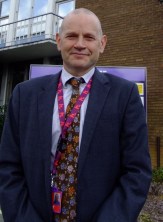

 Moves to legalise cannabis risk ‘fuelling the nation’s mental health crisis’, the charity Rethink Mental Illness has warned.
 Alcohol was the main reason for almost 360,000 hospital admissions in 2018-19, according to new figures from NHS Digital – a 6 per cent increase on the previous year and 19 per cent up from a decade ago.
 A new Commission on Alcohol Harm has been launched with a call for written evidence. The commission has been established in the absence of an up-to-date alcohol strategy for the UK, says the Alcohol Health Alliance.


 Claire Brown, editor